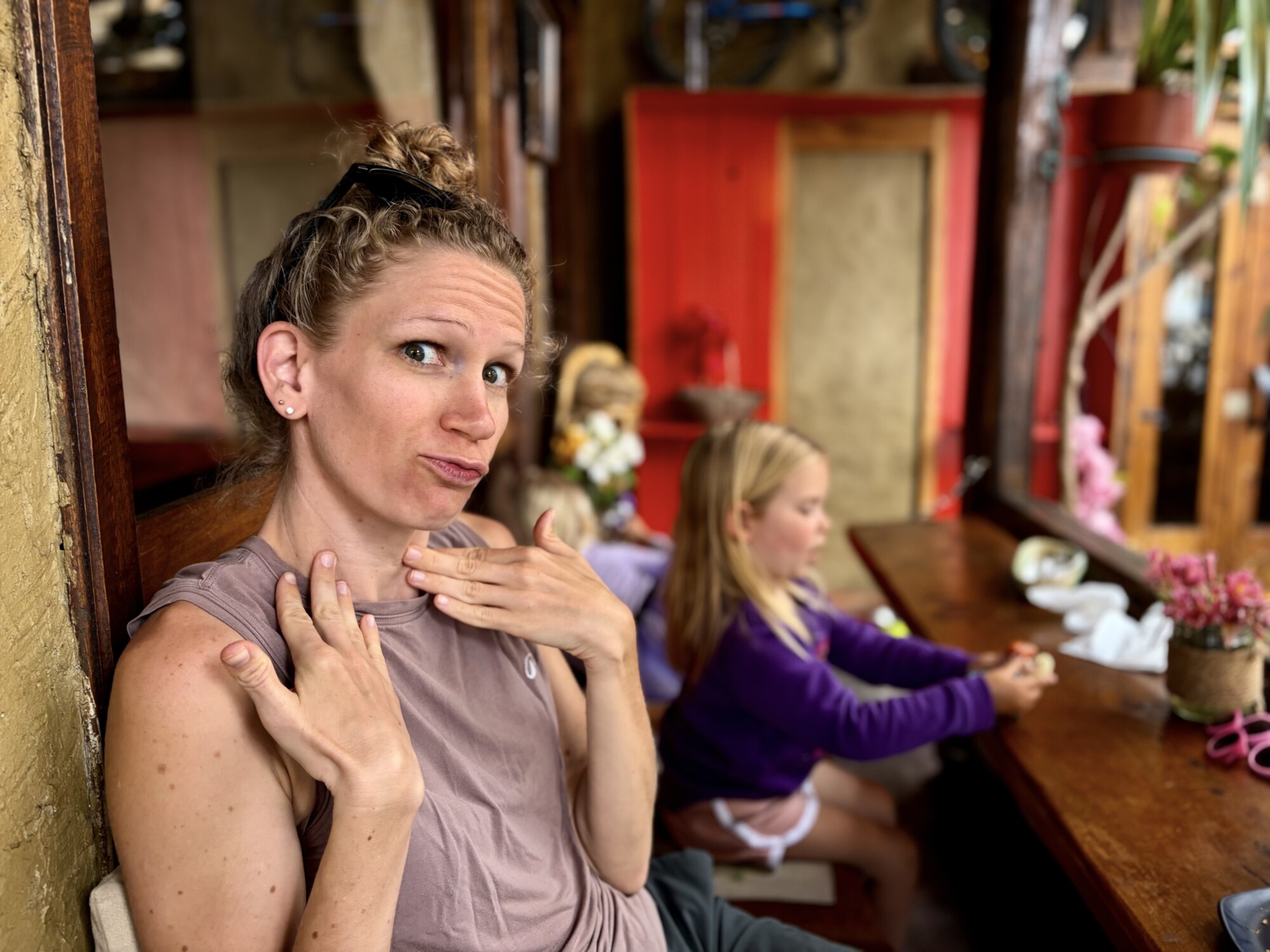
One of the biggest questions we get is how we make money while traveling full-time as a family, and honestly, I understand why people ask because most people only know travel through the lens of vacations.
When people hear that we travel full-time with our two kids, they usually assume we must have massive wealth, passive income, trust funds, or some magical online business that was already making money before we left the United States.
Part of us thought that too.
Before we left, the only version of travel we really knew was vacation travel, and vacation travel is expensive because most people are trying to fit everything into one or two weeks before rushing back to work again. That usually means resorts, eating out constantly, flights every few days, excursions, rental cars, airport spending, and convenience spending because you are trying to maximize your limited time away.
But after traveling full-time with our kids across multiple countries for over a year, we realized something important.
The bigger issue usually is not income alone.
A lot of the time, the real issue is how expensive people’s normal life already is and how little we are taught to question whether the structure we are living inside is actually working for us.
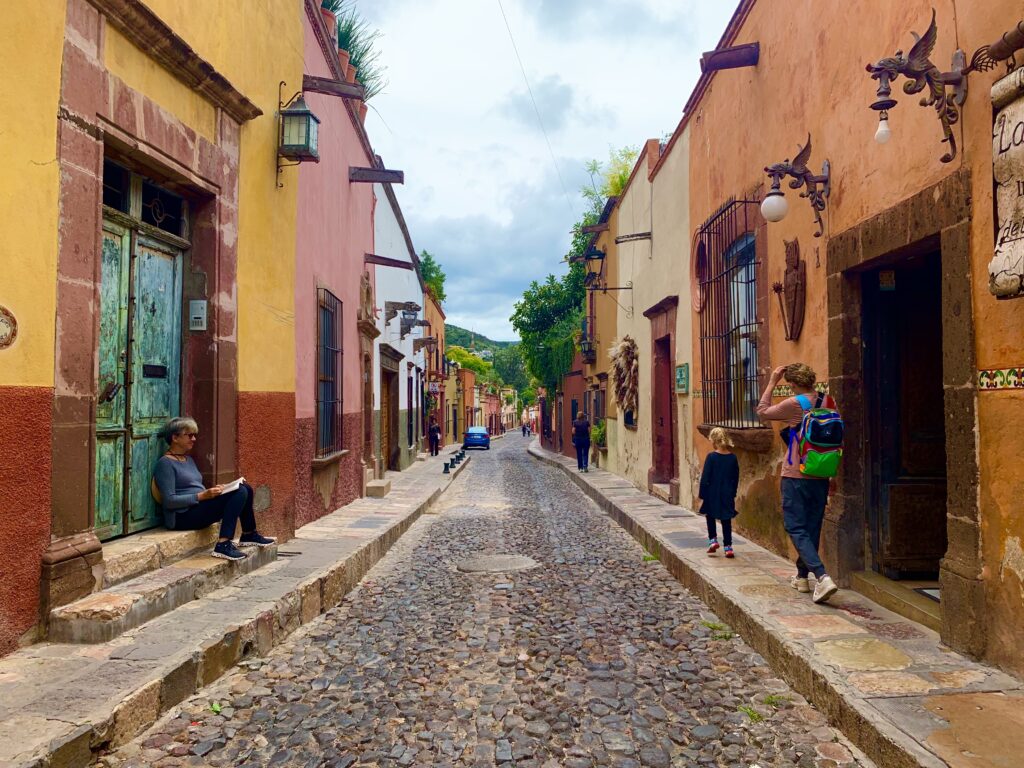
Our Normal Life Was Costing Us Over $100,000 a Year
This is the part people rarely stop to calculate.
People will ask us to break down every dollar we spend while traveling, but most people have never actually sat down and calculated what their normal life costs annually.
Our life in the United States was costing us over $100,000 a year to maintain, and that was not because we were living some wildly extravagant luxury lifestyle. It was because modern life is expensive, especially once you add children, a home, vehicles, insurance, and all the systems that keep that life functioning.
We had a 4,000+ square foot home with a live-in mother-in-law unit, a $2,800/month mortgage, two paid-off vehicles, utilities, insurance, house cleaners, yard maintenance, home maintenance, and all the constant overhead that quietly follows most families around every month.
Then there is the hidden spending that becomes easy to justify when you are exhausted from working all the time. Amazon purchases. Convenience spending. Subscriptions. Eating out because you are tired. Weekend spending. Short vacations because that is all your PTO allows. Spending money to make a stressful life feel easier to maintain.
A lot of people think travel is the expensive part.
For us, staying still was costing more.

We Did Not Leave With a Perfect Remote Income
Another assumption people make is that families like ours must have already had a huge online business before we left.
We did not.
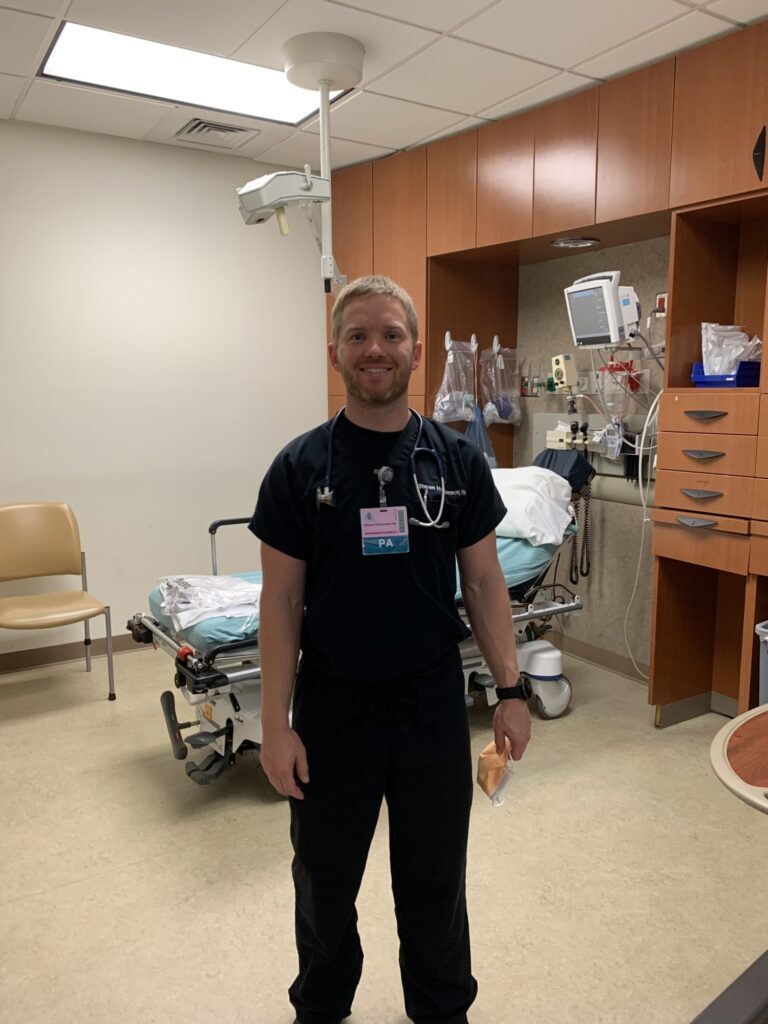
My husband and I both worked as physician assistants for 10 years. I worked in trauma critical care, and my husband worked in emergency medicine. Our entire adult lives were built around stable careers, traditional income, and the path we thought we were supposed to follow.
We quit stable careers, but we did not leave because we had everything figured out financially online already. At the time, I had never run a business before, never made money online, and had absolutely no background in content creation, affiliate marketing, blogging, or brand partnerships.
I only knew that I wanted to document our family’s life and show what traveling with kids actually looked like because so much of what I saw online felt either luxury-based or completely unrealistic for normal families.
So no, we did not leave with guaranteed remote income.
We left with savings, reduced overhead, and enough margin to give ourselves time to figure out what came next instead of panicking immediately about replacing our income.
How We Prepared Financially Before Leaving
When I say we prepared financially before leaving, I do not mean we randomly woke up one day with $100,000 sitting in our bank account. This took us roughly 10 years to build while we were both working as physician assistants, raising kids, paying off debt, and trying to slowly create a life that gave us more flexibility later instead of just upgrading our lifestyle every time we made more money.
Over time, we started building financial stability in multiple directions at once. We paid off around $160,000 in student loan debt from graduate school, worked toward Coast FI for retirement, contributed to our kids’ 529 plans from the time they were born, kept an emergency fund, and built brokerage accounts that gave us flexibility outside of retirement alone.
At the same time, we also built what we eventually called our “freedom fund,” which became the $100,000 we saved for our gap year.
Here’s what that looked like financially:
- ~$100,000 freedom fund for travel
- Coast FI retirement investing
- $4,000/year into each child’s 529
- $6,000–$8,000 emergency savings
- Taxable brokerage investments for flexibility
The biggest mindset shift was realizing that we wanted our money buying us optionality and time instead of just maintaining a bigger and bigger life.
And honestly, we still lived a pretty normal American life before we left. We had a large home, two paid-off Subarus, cleaners, yard maintenance, and all the overhead that quietly comes with trying to maintain a busy working-parent lifestyle.
Once we decided we wanted something different, we slowly started reducing obligations piece by piece so we would not drag the financial weight of our home life around the world with us.
That eventually meant selling our house, putting our belongings into storage, simplifying what we owned, and making sure we were not paying for two lifestyles at once because that is the part that quietly destroys a lot of long-term travel budgets.
How We Actually Make Money Traveling Full-Time
It took us almost a year before we started making meaningful income while traveling, and even now our income is not one perfectly stable paycheck the way it used to be when we worked in medicine.
Now our income comes from multiple streams that work together.
Our primary platforms are Instagram and Facebook, where we create content around family travel, slow travel, budgeting, and what this lifestyle actually looks like behind the scenes. That income comes from platform payouts, affiliate income, brand partnerships, UGC work, our blog, and our own digital products.
We also still own a rental property, which brings in roughly an extra $1,000/month after expenses, although it does not fully support our travel costs.
Here is what our current income mix roughly looks like:
- Social media platform payouts
- Affiliate income
- Brand partnerships and UGC
- Blog income
- Digital products
- Rental property income
What I want people to understand, though, is that content creation is not easy money the way people often think it is. There is a massive amount of backend work involved between filming, editing, strategy, writing, analytics, product creation, customer support, pitching brands, and constantly learning new skills.
I also invested in courses because I knew I needed help learning how online business and content creation actually worked.
This was not something we magically knew how to do.
What We Still Pay For Every Month
Traveling full-time does not magically erase responsibility.
We still pay for:
- Storage unit
- Phones
- Flights
- Travel insurance
- Car insurance
- School materials
- Healthcare expenses
- Internet and eSIMs
- Business expenses
At the same time, we also eliminated a massive amount of overhead that used to exist in our life back home.
We no longer pay for:
- A mortgage
- Utilities
- Constant home maintenance
- Large entertainment spending
- Excess shopping
- Expensive short vacations
The interesting thing is that we naturally became much more minimalist over time, not because we forced ourselves to, but because when you carry your life with you, you start realizing how little you actually need.

Why Slow Travel Changes the Math Completely
One of the biggest reasons our budget works is because we travel slowly.
Month-long stays are usually cheaper because property owners would rather have guaranteed bookings than empty calendars. Once you stay somewhere longer, transportation costs also go down because you are not constantly moving between cities, paying for flights, taxis, trains, airport food, and last-minute bookings every few days.
Slow travel also allows us to settle into more normal life rhythms instead of staying in constant vacation mode.
We grocery shop. We cook. We use public transit. We go to playgrounds. We create routines. We stay long enough to actually understand how a place functions instead of trying to consume it as quickly as possible.
I think a lot of people accidentally travel in the most expensive way possible because they are trying to temporarily escape their life back home.
We were not trying to escape our life.
We were rebuilding it differently.

Could Most Families Actually Do Something Like This?
I do not think it is honest to say everyone can do this because every family has different barriers and realities they are working through.
Some families are dealing with debt. Some have medical complications, special needs, work limitations, visas, education concerns, or family situations that make long-term travel more complicated.
Fear is also a real barrier.
There is a certain level of uncertainty that comes with stepping outside the default path, and not everyone has the same risk tolerance.
At the same time, though, I think many people underestimate how adaptable children are, how expensive normal life already is, and how many alternative paths exist outside of the script most of us were handed growing up.
For some families, this might look like:
- taking a sabbatical
- trying a few months abroad
- working remotely
- worldschooling
- slow traveling seasonally
- testing the lifestyle gradually
There is not one correct way to do this.

The Hardest Part Was Not Actually the Money
The hardest part was psychological.
It was leaving certainty. Changing identity. Tolerating uncertainty. Rebuilding routines constantly. Learning how to parent abroad while also building a business and trying to create structure for our kids in new places over and over again.
We also had to shift our identity from being physician assistants to becoming parents, travelers, and entrepreneurs, and that emotional shift was honestly harder than budgeting ever was.
Money is mathematical.
The mental side of changing your entire life is much harder.
Final Thoughts
This lifestyle is not built on endless money.
It is built on intentionality, reducing overhead, flexibility, learning new skills, and questioning whether the default version of life we were handed was actually the only option available.
There are tradeoffs. There are uncomfortable moments. There are risks.
And this may not be permanent forever.
But traveling full-time with our kids taught us that there are far more ways to build a meaningful life than the script we originally thought we had to follow.
And honestly, that realization changed us far more than travel itself ever did.
More on the Blog:
What if your partner is not on board?