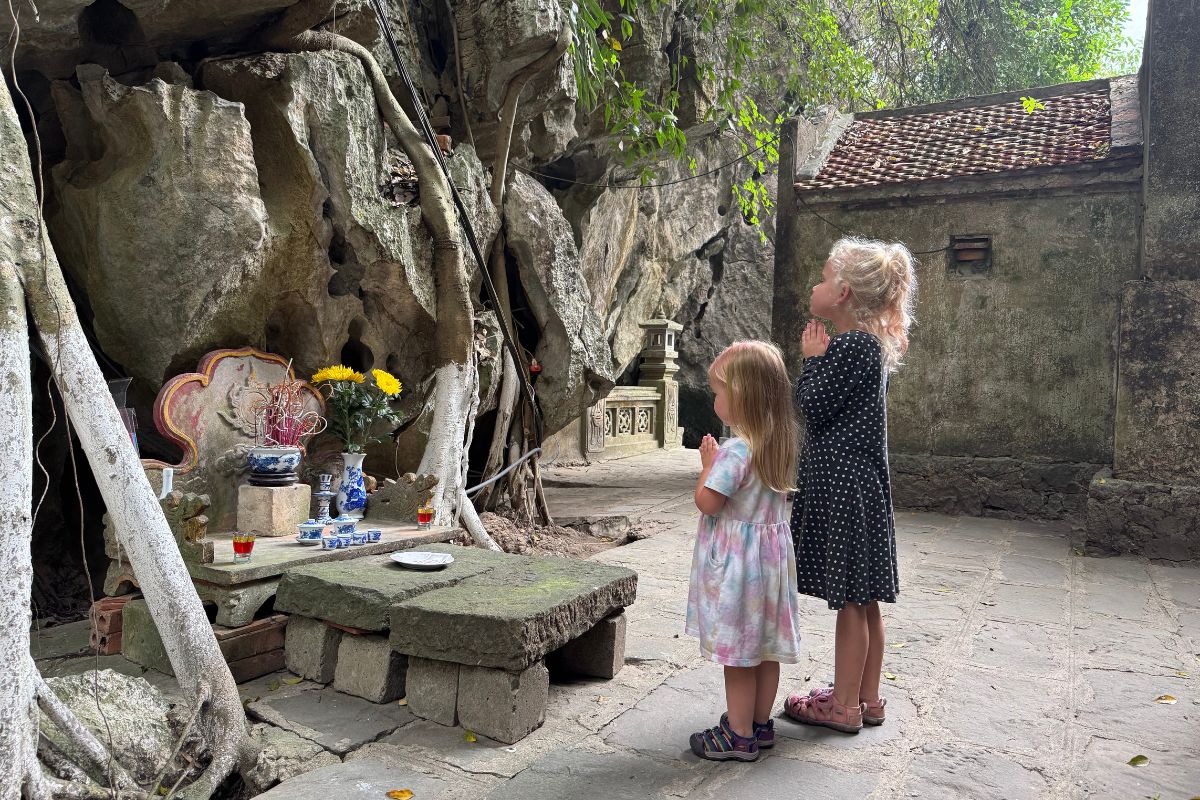
If you are wondering what the best age is to travel with kids, especially for long-term travel or a family gap year, I want to start by saying this: I understand why this question feels so big.
It is not really just about age.
It is about money. It is about safety. It is about school. It is about memories. It is about whether your children will adjust, whether you will regret it, whether people will judge you, and whether you are somehow making childhood better or harder by choosing something outside the normal path.
Families ask us about this all the time because most parents do not want to casually experiment with their children’s lives. They want to make a good decision. They want to feel like if they spend the money, leave the job, homeschool, worldschool, travel abroad, or take a year away from regular life, that it will actually be worth it.
I think that is why the question of the “right age” carries so much weight.
Parents are not usually asking, “What age is easiest?”
They are asking, “Will this hurt my kids?”
They are asking, “Will they remember it?”
They are asking, “Will we lose something we cannot get back?”
They are asking, “Am I allowed to want this life too?”
When we started traveling full-time, our daughters were two and four years old. To a lot of people, that sounded too young. Some people thought we should wait until they were older and could remember more. Others thought we should wait until they were more independent, out of the toddler stage, or able to appreciate museums, history, and culture in a deeper way.
I understand all of those concerns.
At the same time, after almost twenty months of long-term family travel, I can say with a lot more clarity that there is no perfect age to travel with kids. Every age gives you something, and every age asks something from you.
Traveling with toddlers and preschoolers is not better than traveling with older kids. Traveling with school-age children is not automatically better either. The experience changes with each stage, and the real question is not, “What is the perfect age?”
The better question is, “What season of life is our family in, and what are we willing to trade for the life we want?”
Why Families Feel So Much Pressure to Choose the Right Age
I think parents feel pressure to time family travel perfectly because childhood already feels like something we are supposed to optimize.
We are told to choose the right school, the right neighborhood, the right activities, the right routines, the right food, the right sleep schedule, the right amount of independence, the right amount of structure, and somehow make all of it add up to a child who is happy, successful, emotionally secure, and not damaged by any of our choices.
Then add long-term travel into that conversation, and suddenly the pressure gets even louder.
If you are thinking about traveling full-time with kids, taking a family gap year, homeschooling while traveling, or leaving the traditional school calendar for a while, you are not making a small decision. You are stepping outside what many people around you consider normal.
That can make parents feel like they need to defend the decision before they have even made it.
They worry their kids are too young.
They worry their kids are too old.
They worry about safety abroad, sleep, food, illness, routines, socialization, school, and whether their children will resent them later.
I do not think those fears are silly. I think they are the fears of parents who care deeply.
What I do think is dangerous is letting the pressure to make a perfect decision keep you from making an intentional one.
There is no age where every concern disappears. Babies come with sleep and feeding needs. Toddlers come with meltdowns and physical exhaustion. Preschoolers need routine and regulation. School-age children bring education, friendships, and social considerations. Teenagers may remember more, but they may also have stronger opinions and deeper attachments to the life they already know.
Every stage has beauty. Every stage has friction.
That is not a reason to avoid travel. It is a reason to be honest about what your family needs in the season you are actually in.
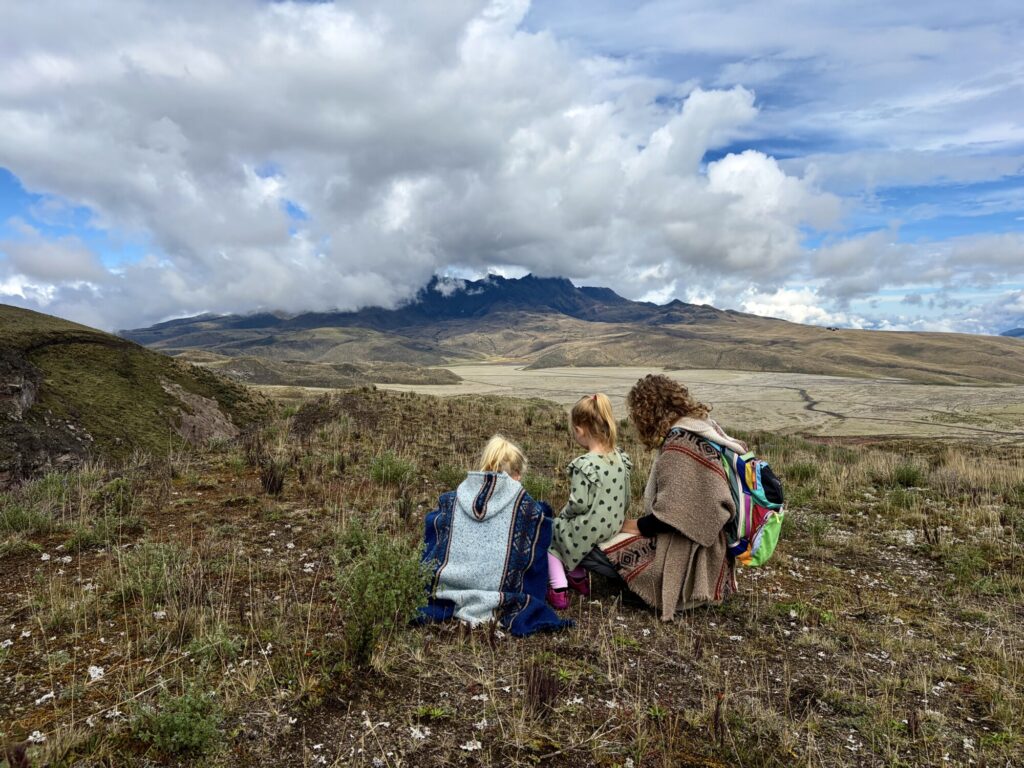
Why We Chose to Travel When Our Kids Were 2 and 4
When we left for long-term travel, my husband and I had both worked as Physician Assistants for about ten years.
From the outside, our life looked responsible. We had good careers. We had a house. We had done the things many people are told to do if they want security and stability.
The problem was that our actual day-to-day life did not feel like the life we wanted our children to grow up inside.
On the days we worked, we barely saw them. On the days we were off, we were trying to recover, catch up on errands, manage the house, and prepare to go back to work again. I could feel how unavailable I was becoming, not because I did not love my kids deeply, but because the pace of our life was taking so much from us.
That was one of the most painful realizations for me.
We had built a life that looked successful, but it was not giving us the time, presence, or connection we actually wanted as a family.
When people ask whether we worried our kids were too young to travel, the honest answer is that I did not worry about their ages in the way people assume I did. I was not lying awake wondering whether they would remember Mexico, Guatemala, India, Vietnam, Laos, Thailand, Indonesia, Malaysia, Singapore, or any of the places we would eventually go.
The age-related piece I thought about most seriously was healthcare.
We are a family that vaccinates, so before we left, I thought carefully about vaccine schedules, destination risks, and what made sense for young children. That was the practical side of their ages that mattered to me. I wanted to understand what we were walking into and make informed choices, not just romanticize the idea of traveling with little kids.
Outside of that, my questions were the same questions I had as a mother living in the United States.
Are they safe?
Are they loved?
Are they emotionally secure?
Are we available to them?
Are we creating a life where they feel connected to us and curious about the world around them?
Those questions mattered more to me than whether they would be able to recall specific details years later.
I was actually more afraid of waiting.
My oldest was approaching kindergarten age, and I knew that once traditional school became part of our daily life, the decision to leave would become more complicated. Not impossible, but more complicated. School calendars, friendships, activities, and routines naturally create roots. Those roots can be beautiful, but they also change how easily a family can step away.
Adults are not any different. The longer we stay in one version of life, the harder it becomes to imagine another one.
For us, traveling when our kids were two and four felt physically hard, but logistically flexible. They were young enough that their world was still deeply centered around us as their parents. They needed routine, safety, food, sleep, play, and connection. They did not need a perfect itinerary or a long list of tourist attractions.
That made slow travel possible in a way that fit their stage of life.
It also helped that we had prepared financially before leaving. We had reached Coast FI, which meant our retirement investments were already set up for the future, and our main responsibility became covering our current living expenses. By reducing our monthly overhead through slow travel, we created more breathing room than we had in our old life.
I think a lot of families assume long-term travel only works if you have endless money. In our experience, the bigger shift was not becoming endlessly wealthy. It was changing the structure of our life so we needed less money to live well.
That shift changed everything.

Will Kids Remember Traveling When They Are Young?
This is the question people ask more than almost anything else.
They say, “The only problem is they will not remember it.”
I understand why people think this way. Travel costs money. It takes effort. It requires planning. When something asks that much from you, it is natural to want proof that it will matter later.
Still, I have never believed that memory is the only measure of whether something is valuable for a child.
Most young children will not remember their first birthday party. They may not remember the bedtime books you read, the playgrounds you visited, the songs you sang in the car, or the mornings you spent making pancakes together. Parents still do those things because childhood is not only about what a child can recall later.
Childhood is also about what forms them while they are living it.
A young child may not remember the exact street they walked down in Hanoi or the train ride they took in India, but they can still absorb the feeling of being with parents who are present. They can still become comfortable hearing different languages, trying new foods, meeting people who look or live differently, and understanding that the world is bigger than one neighborhood, one country, or one way of doing life.
That is what I care about.
Not whether my daughters can list every country we visited when they are adults.
I care that their nervous systems experienced us slowing down.
I care that they watched us choose a different life when the old one was no longer working.
I care that curiosity, adaptability, and connection became part of their normal.
Of course, we take photos and videos. Of course, we tell stories. Those things help preserve the details. The deeper value, though, is not only in what they will remember. It is in who they are becoming while they are experiencing it.
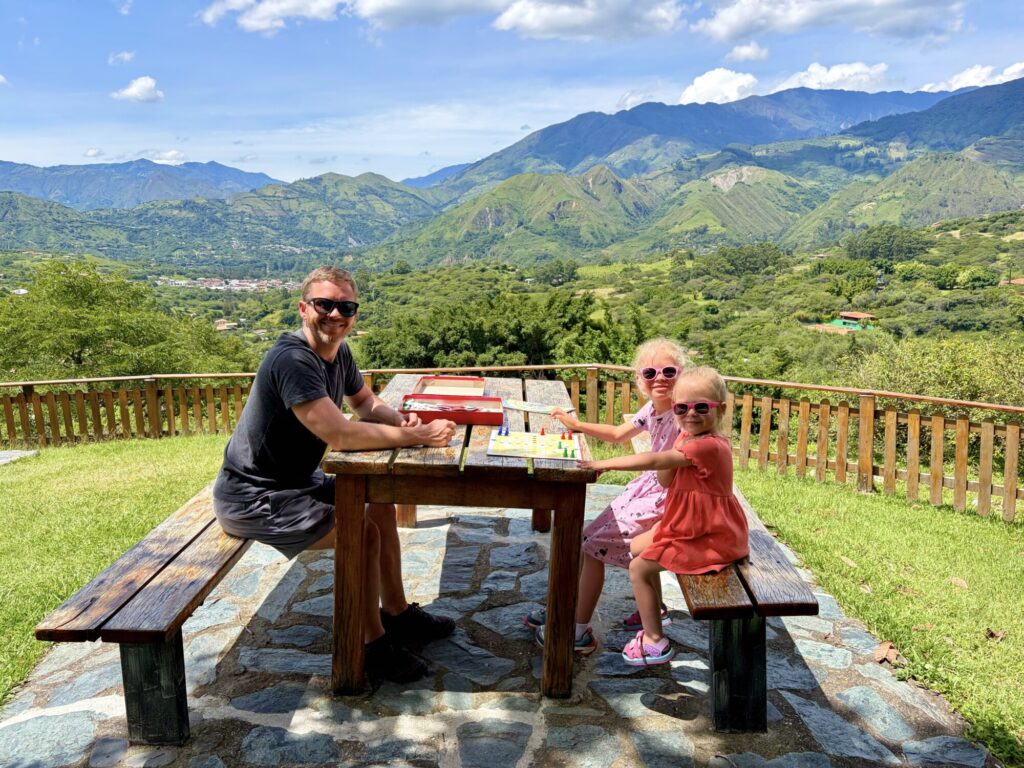
What Long-Term Travel With Toddlers and Preschoolers Actually Looks Like
One of the biggest misconceptions about traveling full-time with kids is that it looks like a constant vacation.
It does not.
At least, not for us.
Long-term family travel looks much more like regular life than people expect. We wake up, make breakfast, go grocery shopping, do laundry, find playgrounds, cook meals, walk through neighborhoods, and keep bedtime routines. Our kids still have big feelings. They still need snacks at inconvenient times. They still get tired. They still need downtime.
The location changes, but parenting does not disappear.
What changed for us was the pace.
We stopped trying to live a rushed life and call it success.
Slow travel became the foundation for making this lifestyle sustainable with young children. We usually stay in one place for at least a month because that gives everyone time to settle. Our kids learn the neighborhood. They recognize the grocery store. They find favorite playgrounds. We figure out transportation, food, routines, and where to go when everyone needs a reset day.
That rhythm matters because children do not need constant novelty. They need safety inside the novelty.
This is where I think a lot of families get stuck. They imagine traveling with kids through the lens of vacation travel, where every day is packed and every destination has to be maximized. That kind of pace can be exhausting even for adults. With young kids, it can become completely unsustainable.
Long-term family travel is different.
It is not about seeing everything.
It is about living somewhere long enough that your family can breathe.
For us, that means choosing destinations based on the season of life we are in. With toddlers and preschoolers, we looked for places with walkability, parks, playgrounds, outdoor space, grocery access, and a slower rhythm. We cared less about seeing every famous attraction and more about whether our day-to-day life would actually work.
That is not glamorous, but it is what makes travel with young kids possible.
A good day might be a local market, a playground, lunch at home, quiet time, and an evening walk. That may not sound like a bucket-list itinerary, but when you are living this way for months, those are the days that create stability.
What helped us most while traveling with young kids
This is one place where a list actually matters because these are the pieces that made the lifestyle work for us:
- We stayed longer instead of moving constantly.
- We chose walkable neighborhoods whenever possible.
- We prioritized grocery access over tourist convenience.
- We kept bedtime and morning routines familiar.
- We built in quiet days without guilt.
- We used playgrounds, parks, and outdoor spaces as part of daily life.
- We adjusted destinations based on our children’s current needs, not just our own interests.
That is the difference between traveling with kids and dragging kids through travel.
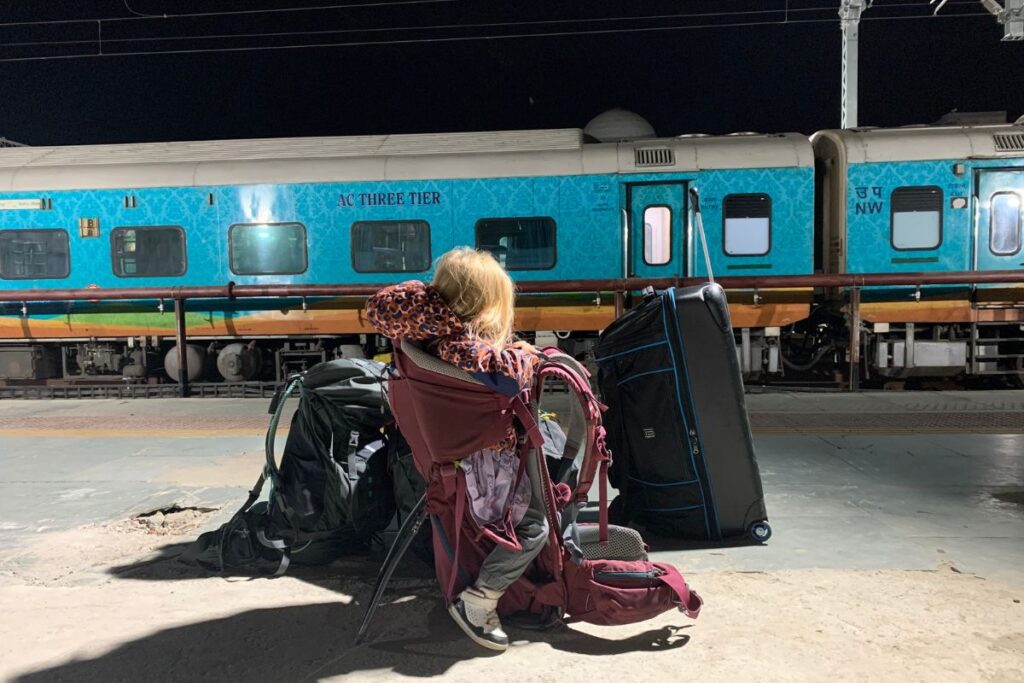
What Was Hard About Traveling With a 2 and 4 Year Old
I do not want anyone to read this and think traveling with little kids is effortless.
It is not.
There were hard days. There were exhausting travel days, overstimulated kids, sickness, bad sleep, heavy bags, missed meals, and moments when everyone needed a reset. There were times when we had to change plans because the version of the day we imagined was not the version our children could handle.
That is real.
Before kids, my husband and I could backpack through different countries with almost no plan. We could eat whatever was cheapest, sleep wherever worked, move quickly, and deal with discomfort without thinking much about it.
Traveling with young children requires a different level of awareness.
You have to think about food, sleep, bathrooms, safety, transportation, overstimulation, and how much everyone has already been asked to handle that day. You learn very quickly that your child’s nervous system is part of the itinerary whether you planned for it or not.
At the same time, I want to be honest about something that surprised me.
Many of the things people warned us about were not the hardest parts.
Our kids did not fall apart because we traveled. They adapted far better than many adults would have. They got sick less often than they did during some seasons at home. They slept well because we recreated familiar routines wherever we stayed. They found joy in simple things like markets, animals, buses, playgrounds, and fruit stands.
The hard part was not that our children could not handle travel.
The hard part was learning to let go of the version of travel we had before kids.
We could not move at our old pace. We could not pack every day with activities. We could not pretend that our needs were the only needs in the room. That adjustment required humility, especially as parents who had loved travel before children.
Still, I never felt like those hard parts meant we had made the wrong decision.
Parenting was hard in our old life too.
The difference was that at home, our hard often felt like disconnection. It felt like rushing, recovering from work, outsourcing our best hours, and trying to squeeze family life into the margins.
Travel brought different challenges, but it also gave us more of each other.
That trade felt worth it to us.
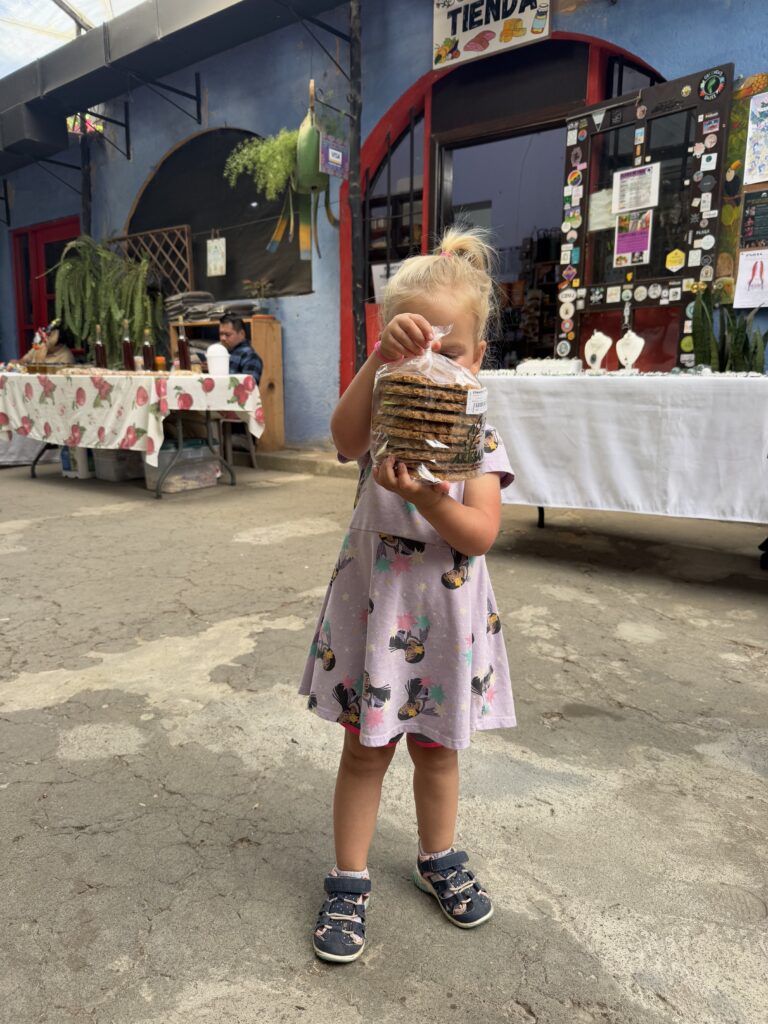
Why Traveling Before School Age Can Be a Powerful Window
A lot of families assume travel will be easier when their kids are older, and in some ways, that is true.
Older children can walk farther. They can carry more of their own things. They can understand history, culture, and museums in a deeper way. They can communicate their needs more clearly and participate in planning.
Those are real advantages.
At the same time, younger children have a type of flexibility that people often overlook.
Before traditional school starts, their world is usually still centered around the family. They may have routines and preferences, of course, but they are not yet as rooted in school calendars, sports, extracurriculars, close peer groups, and the social identity that comes with being older.
Our daughters adapted quickly because they did not have a fixed idea of what daily life was supposed to look like.
They were not comparing every new place to a life they felt deeply attached to leaving behind. Home was largely wherever we were together. That gave us an opening that I do not take lightly.
I am not saying younger is always better.
I am saying younger can be more flexible in ways that make long-term travel easier than people expect.
For our family, ages two and four meant we had to move slowly and parent intentionally, but we also had the freedom to build our days around family rhythm instead of outside systems.
That mattered.

How School Age Changes Long-Term Family Travel
School age changes the conversation because education becomes more visible.
People may judge travel with toddlers, but they often become much louder once school enters the picture. Suddenly the questions shift from, “Will they remember it?” to “What about school?”
I understand why.
Education matters. Structure matters. Friendships matter. Parents should think carefully before stepping outside a traditional school path.
For our family, my oldest reaching kindergarten age forced us to define what education would look like while traveling. We chose a blend of homeschooling and worldschooling, which allows us to use structured academics while also letting real life become part of the learning.
Right now, our formal priorities are simple: math, reading, and writing. With one-on-one instruction, that does not take six hours a day. It is usually less than an hour of focused work for my kindergartner, while my husband works with our younger daughter on preschool-level learning.
The rest of the education happens through the life we are living.
Our kids are learning geography by moving through real places. They are learning culture by participating in daily life. They are learning religion, language, food, transportation, money, history, and diversity through actual exposure rather than only through a screen or textbook.
I do not say that as someone who thinks academics do not matter.
They absolutely do.
I say that because I think education has to be bigger than worksheets if we are preparing children for the world they are actually going to live in.
Information is everywhere now. The skill is not simply memorizing facts. Children need to learn how to think, how to ask better questions, how to discern what information is true, how to communicate, how to adapt, and how to understand people who live differently than they do.
Travel gives us a way to practice those skills in real time.
What we consider when traveling with school-age kids
This is where families need to be practical, not romantic:
- What are the homeschool laws in your state or country?
- What academic skills need consistent practice?
- How does your child learn best?
- How much structure does your child need emotionally?
- How will you create community while traveling?
- What would make travel supportive instead of disruptive?
Those questions matter because long-term travel with school-age children requires more responsibility. It is not enough to say, “The world is their classroom,” and ignore the basics.
For us, the answer has been structure plus experience.
We do the core academics, and then we let the world add depth.
Image idea for this section: Use photos of homeschooling at a table, reading together, museum visits, maps, local signs, cultural sites, or your kids learning through everyday life. These images will help parents see that education while traveling can be both structured and experiential.
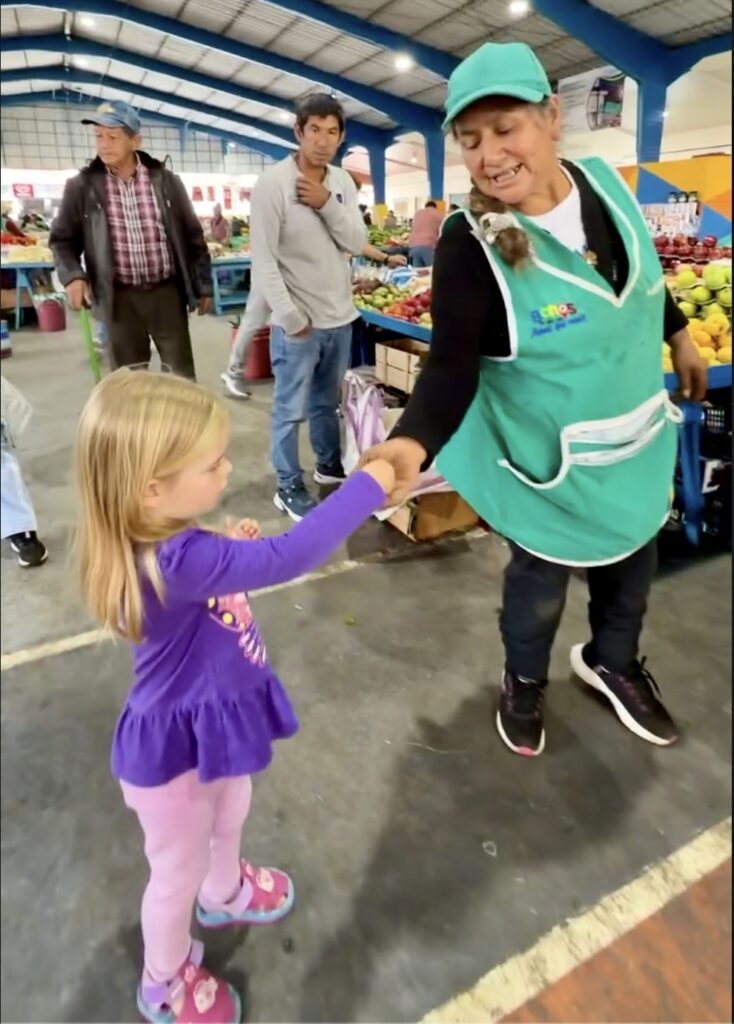
What About Socialization and Friendships?
Socialization is one of the biggest fears families have when they think about homeschooling, worldschooling, or traveling long-term with kids.
People worry their children will miss long-term friendships, stability, community, and the normal social development that comes from being around the same peers every day.
I understand that concern.
Roots matter. Familiar faces matter. Long-term friendships matter.
At the same time, I do not believe socialization only happens in one building, with children the exact same age, during a specific set of hours.
Our daughters meet children constantly while traveling. Sometimes those children speak English. Sometimes they do not. Sometimes the friendship lasts for an afternoon at a playground, and sometimes it stretches over weeks in the same place. They also interact with adults, shopkeepers, neighbors, guides, other traveling families, and people from completely different backgrounds.
That is socialization too.
It is different from traditional school socialization, and I think we need to be honest about that. It does not always create the same long-term roots. It does not always offer the same predictable community.
What it does offer is exposure.
It teaches children how to enter new environments, communicate across differences, adapt socially, and understand that connection is not limited to one type of person or one type of place.
The sibling bond has also been a major part of our experience. Our daughters spend a lot of time together, and travel has strengthened that relationship in ways I deeply value.
I do not think every family needs to make the same choice we did.
Some families will prioritize deeper roots in one place, and that is valid. Other families will prioritize broader exposure and flexibility, and that is valid too. Most families are probably trying to find some combination of both.
The important thing is to stop pretending one path guarantees a perfect childhood.
It does not.
Traditional school does not guarantee social confidence.
Travel does not guarantee open-mindedness.
Homeschooling does not guarantee independence.
Stability does not guarantee happiness.
Parents are always choosing trade-offs.

Is It Better to Wait Until Kids Are Older?
Waiting until kids are older can make certain parts of travel easier.
Older children often remember more. They can participate in planning, ask deeper questions, handle longer walks, engage more with museums, and understand cultural and historical context in a more mature way. They may also need less physical help, which can make travel days easier on parents.
Those are real benefits.
If a family waits until their children are older, that does not mean they missed the best window. It means they are choosing a different kind of travel experience.
The trade-off is that older children may also be more rooted in the life they already have. They may have close friends, sports, activities, school commitments, and stronger opinions about leaving. Teenagers especially may not want to spend extended time away from their peers or live in close quarters with their parents for months at a time.
That does not make long-term travel impossible.
It simply means the decision may require more collaboration, more conversation, and more consideration of each child’s individual needs.
For our family, I do not wish we had waited.
Traveling when our kids were two and four gave us a window of flexibility that fit our family at that time. It allowed us to step out of a life that was burning us out and into one that gave us more time together.
If we had waited, maybe our daughters would remember more. They also might have had more to leave behind.
That is the part families need to consider honestly.
Waiting solves some problems and creates others.
Starting young solves some problems and creates others too.
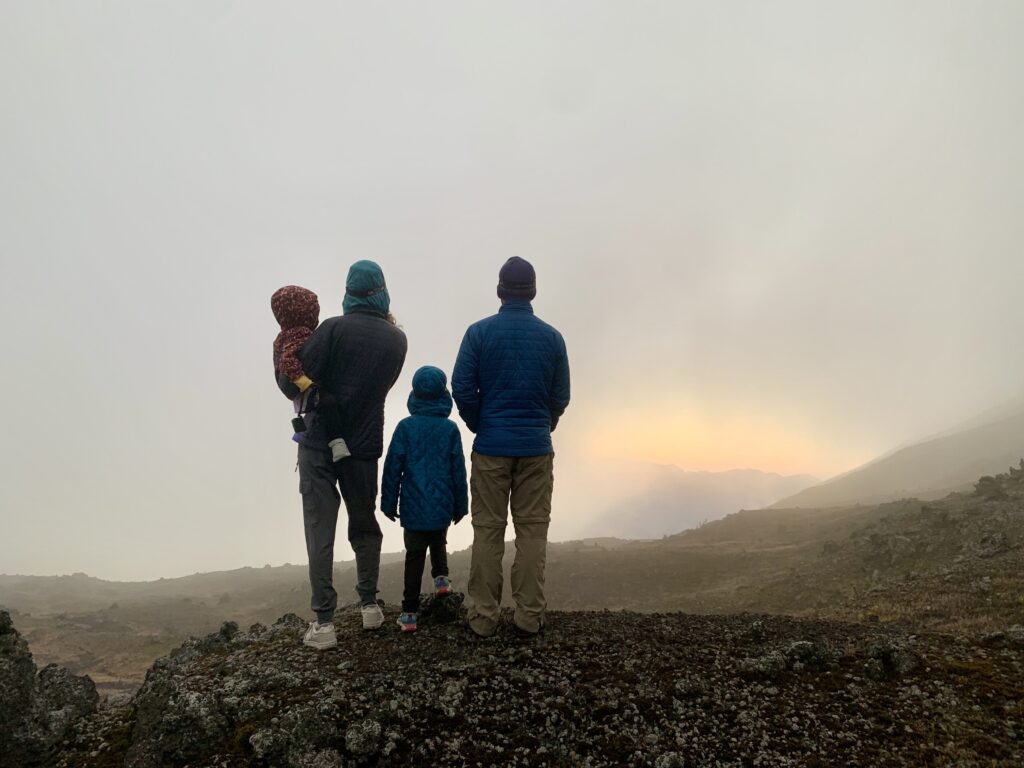
So, What Is the Best Age to Travel With Kids?
After almost twenty months of traveling full-time with our children, I do not believe there is one best age to travel with kids.
There is only the age your children are right now, the season your family is in, and the values guiding your decision.
Traveling with toddlers and preschoolers gave us flexibility, closeness, and the chance to build family rhythms before school and outside commitments became more complicated. Traveling with older kids would have offered deeper conversations, stronger memories, and more independence.
Neither version is wrong.
They are different.
The bigger mistake, in my opinion, is waiting for a perfect age that may never arrive.
Children are not science experiments. They are human beings who grow through connection, environment, exposure, relationships, and experience. We do not get to control exactly who they become, and we do not get to guarantee a perfect outcome by choosing the “right” childhood structure.
What we can do is make intentional choices.
We can ask better questions.
We can look honestly at the life we are living and decide whether it reflects what we say matters most.
For us, choosing long-term travel while our kids were young was not about creating a perfect childhood. It was about choosing more time, more connection, more curiosity, and a wider view of the world.
That is the part I hope families understand.
You do not need to wait until your kids are the perfect age to begin building a life that feels more aligned.
You need to understand the trade-offs, prepare thoughtfully, and be honest about what your family actually needs.
The best age to travel with kids is not a number someone else can give you.
It is the age where your family is ready to stop waiting for perfect and start choosing intentionally.
More on the Blog:
How we prepared financially for our gap year