When we first started looking into what to do in Ipoh, one thing kept coming up over and over again: Ipoh street art.
And I almost skipped it.
We’d already done street art in George Town, and while it was memorable, it was also crowded, hot, and required a surprising amount of patience. The kind of patience that’s hard to summon when you’re traveling with kids and just want something that feels… easy.
So I assumed Ipoh would be more of the same. Maybe quieter. Maybe smaller. But still something we’d have to “do.”
Then I realized something I hadn’t clocked at first: much of Ipoh’s street art wasn’t just inspired by Penang’s now-famous murals. A lot of it was created by the same artist, Ernest Zacharevic.
That gave me pause.
Because suddenly this wasn’t just filler on an itinerary. It felt intentional. Like something worth slowing down for.
And that’s exactly what it turned out to be.
If you’re traveling through Malaysia with kids, Ipoh street art is one of those rare experiences that gives you culture without asking too much in return. No guides herding you along. No rules about volume levels. No trying to keep a toddler quiet in a place that was clearly designed for adults.
It ended up being one of the most relaxed, low-pressure ways we explored Ipohm and honestly, one of the days that felt the most us.

Why Ipoh Street Art Works So Well for Families
Street art is already one of the easiest ways to explore a place with kids. And Ipoh just… makes it even easier.
There’s nothing to prep for. No tickets to buy. No expectations to meet. You don’t have to explain anything before you arrive or convince your kids to care about something they didn’t choose.
You just walk.
The streets aren’t frantic, the traffic isn’t overwhelming, and everything feels scaled down just enough that you’re not constantly on edge. Even with young kids, it felt manageable.
What surprised me most was how little effort it took on our part. We weren’t narrating or teaching or guiding. The art did all of that for us.
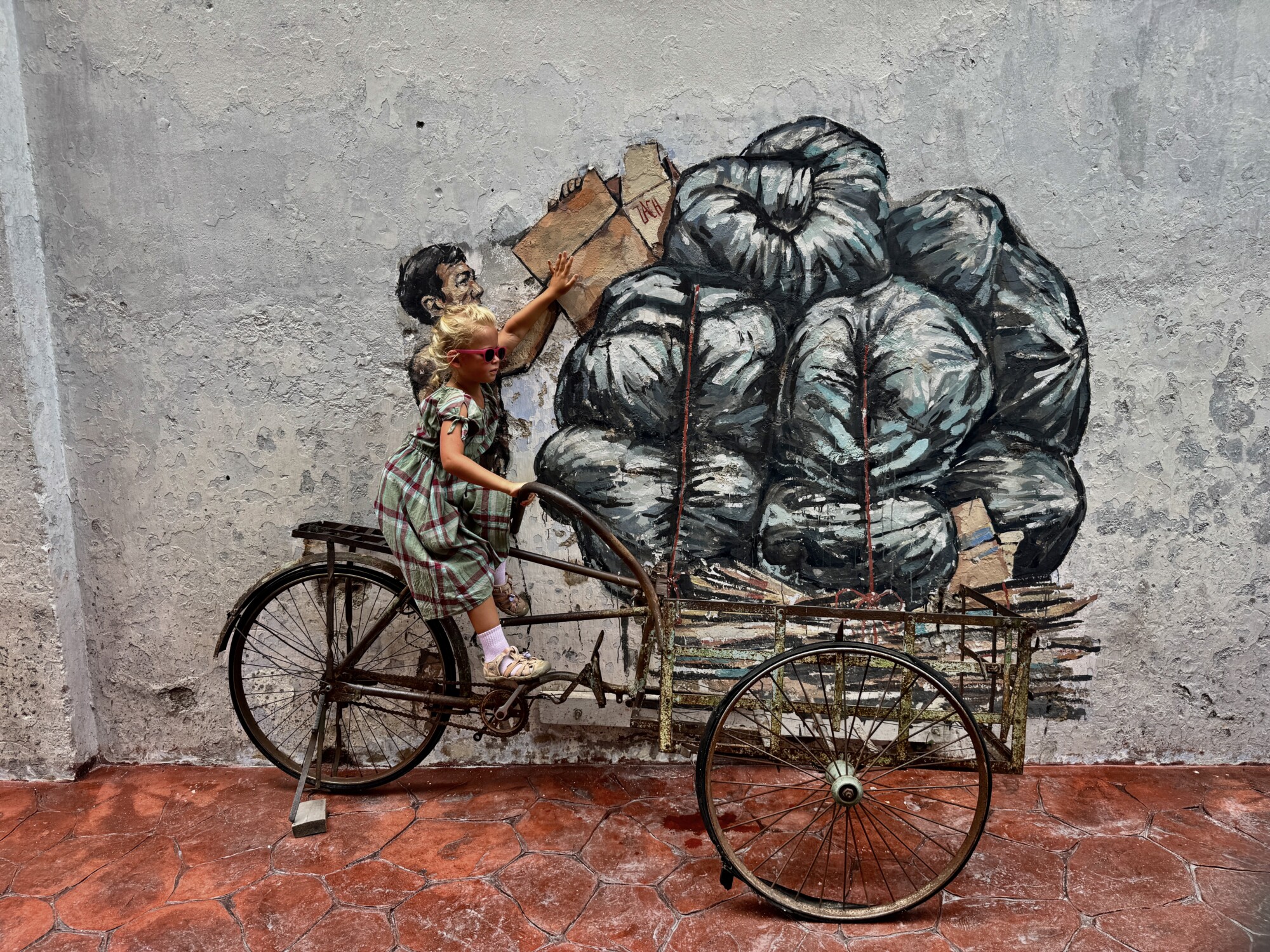
The murals are colorful and playful, full of characters and movement, and our kids immediately started inserting themselves into the scenes. They weren’t asking what the art meant. They were deciding who the people were, what they were doing, and where the story was going next.
It became pretend play without us trying to turn it into an “activity.”
And that’s why it worked so well.
We weren’t asking them to slow down or be quiet or stay still. They could talk, laugh, point, pose, move on when they were ready. Compared to museums or guided tours, it felt effortless. We were just… walking around together.
We went in the morning, which helped. Cooler air, better moods, fewer people. We took a Grab into Old Town, got out, and explored everything on foot. I had a loose map saved on my phone, but we weren’t glued to it. It was more of a safety net than a plan.
That flexibility mattered. If someone got tired, we stopped. If someone wanted to linger, we lingered. There was no sense of “we have to finish this.”
And with kids, that makes all the difference.
A Slower, Softer Side of Malaysia
Ipoh has this reputation as a “retirement town,” and after spending time there, I kind of get why people say that. But traveling with kids? That slower pace is exactly what made it work.
Even though Ipoh is the capital of Perak, it doesn’t feel busy in the way other Malaysian cities can. There’s no constant hum of urgency. No feeling like you’re in the way. It feels like a place that’s perfectly okay with you taking your time.
We stayed in Ipoh for five weeks, long enough to notice the rhythm. Weekends and late afternoons do get busier, especially around Old Town and Concubine Lane. You’ll see more people, but even then, it never tipped into chaos..
When we explored, we didn’t have a plan beyond “walk until someone needs a break.” And somehow, that was enough. The kids naturally took the lead. They decided which murals deserved a second look, which ones were “done,” and when it was time to move on.
It felt less like sightseeing and more like being present.
That slower energy is what made Ipoh feel like a place to reset for us. After months of moving through countries, cities, and logistics, it was a relief to be somewhere that didn’t ask us to keep up.
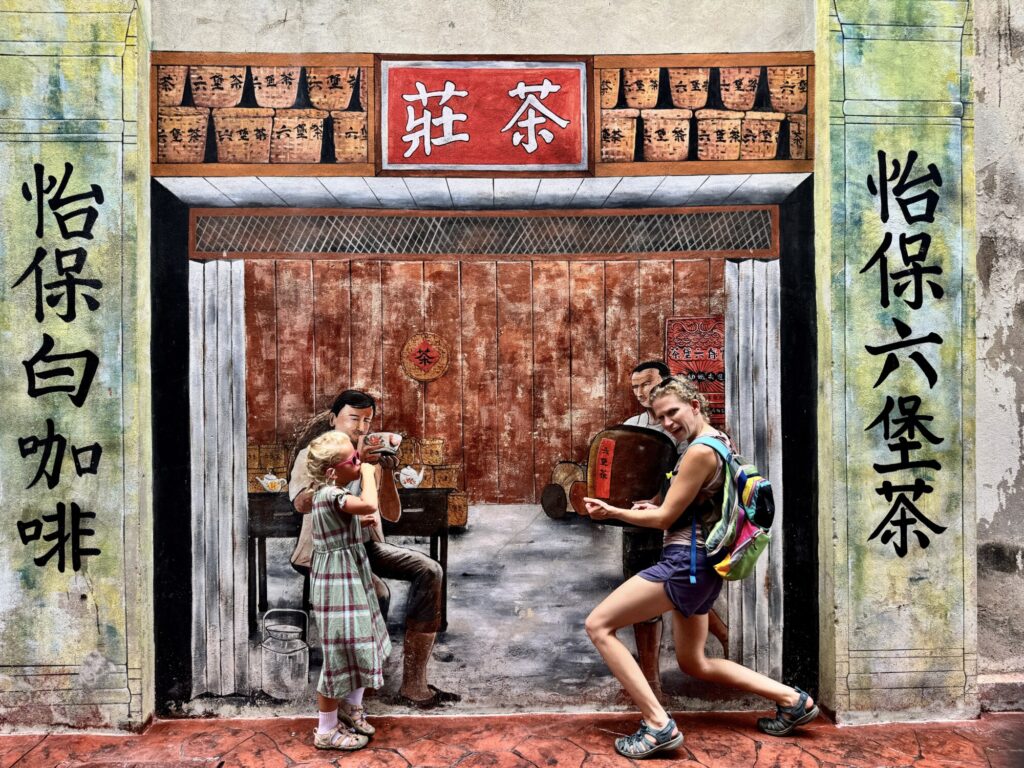
Where to Find Ipoh Street Art (Without Overwhelming Your Kids)
One of the things I appreciated most about Ipoh street art is how contained it is.
Almost everything you’ll want to see sits inside Ipoh Old Town, which means you’re not bouncing all over the city trying to chase murals while your kids slowly unravel. You arrive, you park (or get dropped off), and then you just walk.
That’s it.
We didn’t book a tour or follow a strict route. I had Google Maps open and a short list of streets saved, more as reassurance than anything else.
Some of the areas we naturally drifted through were:
- Lorong Seni (often called Mural Art’s Lane)
- Streets around Jalan Panglima
- The area near the Birch Memorial Clock Tower
But honestly, half the fun was not knowing exactly what was coming next.

Ipoh Old Town is small enough that nothing feels far. Our five-year-old walked the whole time, and our three-year-old was happy in the carrier. Sidewalks were manageable, traffic was light, and there were plenty of natural pauses built in; cross streets, shaded corners, cafés popping up just when someone needed a break.
And those cafés matter.
One thing I loved was how Old Town naturally spills into coffee shops and snack spots. You’re never walking too long without an option to stop, sit, regroup, or bribe your kids with a drink or a treat. It makes the whole experience feel realistic instead of aspirational.
If you’ve done street art in George Town, this will feel very different. There, it can feel like an event you’re actively participating in. In Ipoh, it feels like something you just notice as you move through the neighborhood.
The Murals That Kids Loved Most (and the Ones We Almost Missed)
This is where Ipoh street art really won me over, because it wasn’t the big, obvious murals that stuck with us. It was the ones we almost walked past.
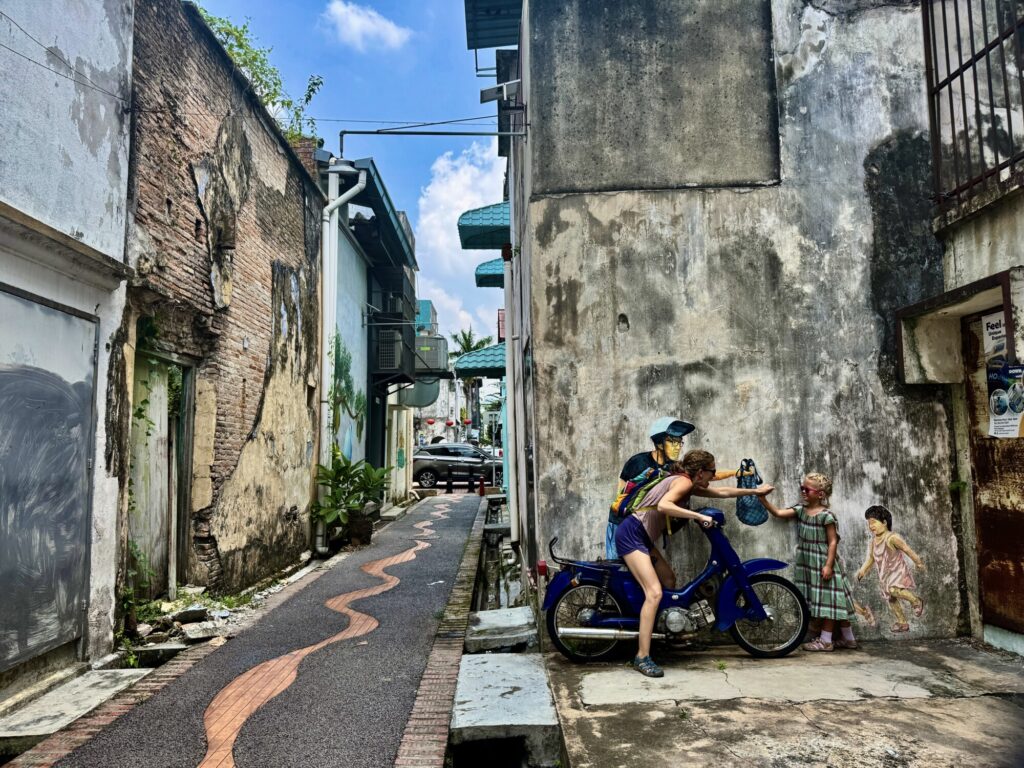
One of our favorite finds was on Lorong Hale. It’s a little tucked away, quieter than the main lanes, and easy to miss if you’re moving too fast. There’s an interactive motorcycle mural there, and the kids can actually sit on it.
They climbed on, posed, pretended they were riding through town, and we just let the moment play out. Those are the photos that end up meaning the most, right? The unplanned ones.
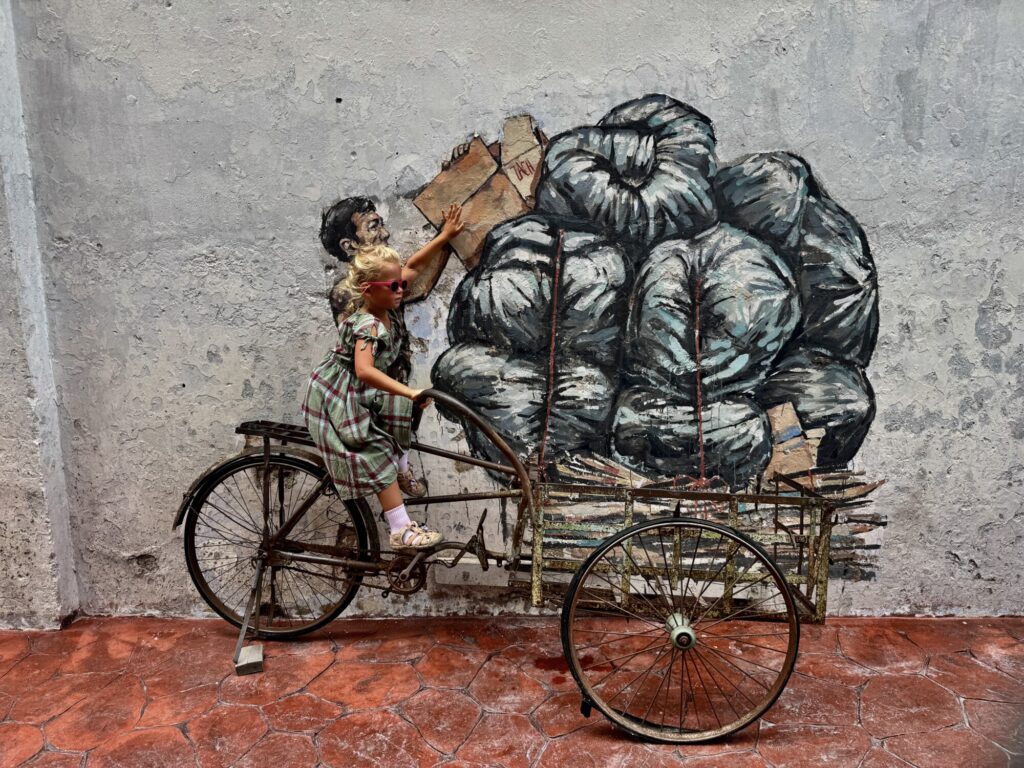
A bit farther along, Market Lane turned into a mini jackpot. Several murals clustered close together; kids jumping, restaurant scenes that turned into pretend play, and an interactive rickshaw with a basket that everyone wanted to sit in. Because everything was close, no one got impatient.
Right off Market Lane, we ducked into De Café & Rest House for a break. Cool air, calm space, and then, one of those small details that turns into a memory, there’s a wall inside where you can measure yourself and your kids. It took two minutes, and somehow it became a highlight.
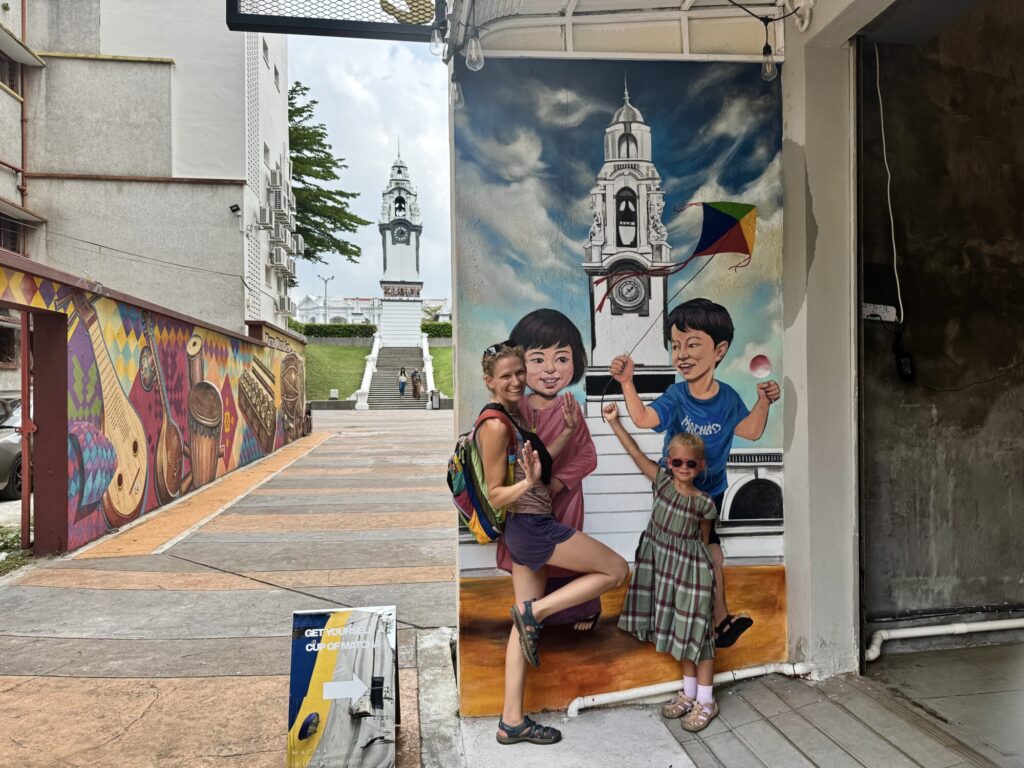
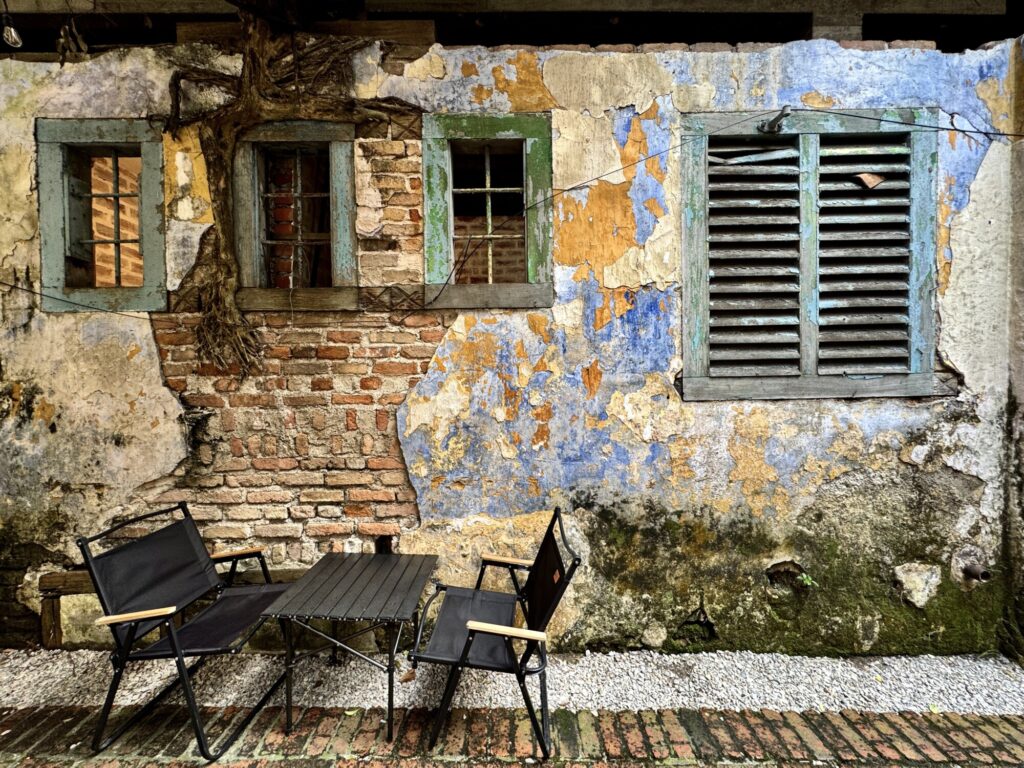
Across from Concubine Lane, Lorong Seni felt almost curated. Street art, coffee cafés, old buildings with texture and character, and photo opportunities everywhere you looked, even if you never stepped inside a single shop.
And just off that lane is Kong Heng Artisan Market. Some shops prefer you not wander in just for photos (fair), but there’s so much to enjoy from the street itself, heritage details, curated goods, and an old outdoor lift that completely fascinated the kids.
We weren’t ticking boxes or chasing highlights. We were just noticing things as we went, and letting the kids decide what was worth stopping for.
And honestly? They made great calls.
Exploring Concubine Lane with Kids (Let’s Be Honest About It)
Okay, let’s talk about Concubine Lane, because if you’re in Ipoh, you’re going to end up here whether you plan to or not.
It’s colorful. It’s lively. It’s packed with snacks, souvenirs, lights, signs, and people trying very hard to get your attention.
Concubine Lane has history, yes, it used to be a narrow lane tied to wealthy merchants and their households, but today, it’s very much a pedestrian street designed for wandering, browsing, and impulse buying.
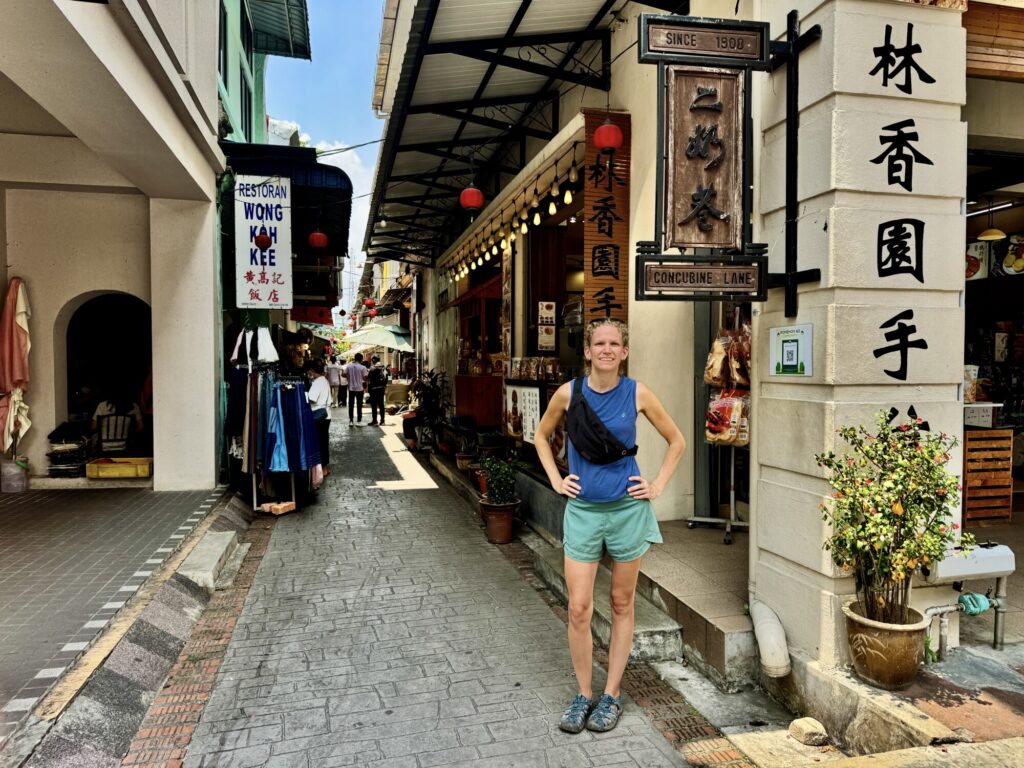
Go Early. Trust Me on This.
If you can, go in the morning.
Earlier in the day, Concubine Lane feels fun instead of overwhelming. You can actually see the details, take photos without feeling rushed, and move at a kid-friendly pace. Later in the day, or on weekends, it fills up quickly.
We found the sweet spot in the morning, wandered through once, and that was enough.
Managing the “Everything Is a Photo Op” Problem
A quick heads-up if you’re visiting with kids: many of the shops along Concubine Lane are designed to pull you inside. Bright colors, interactive displays, playful setups, it’s all very intentional.
Once you step in, there’s often an unspoken expectation that you’ll buy something before taking photos. That’s not a bad thing, it’s just something to know going in.
Our strategy was simple:
- Look freely from the street
- Choose one or two places to actually stop
- Keep moving before anyone (me) felt pressured
We grabbed drinks at the Harry Potter café, let the kids soak it in, and then moved on. Kids are great at keeping things efficient that way, you don’t linger long enough to overthink it.
Snacks and drinks are everywhere, which helps. If energy dips or moods shift, there’s always something close by to reset everyone.
Why It Still Belongs in the Day
Even with the crowds, Concubine Lane is worth seeing. It adds contrast to the quieter parts of Old Town. After wandering calm streets and tucked-away murals, the energy here feels lively.
The key is not trying to make it the main event.
See it. Walk it. Enjoy it. Then step back out into the quieter lanes nearby.
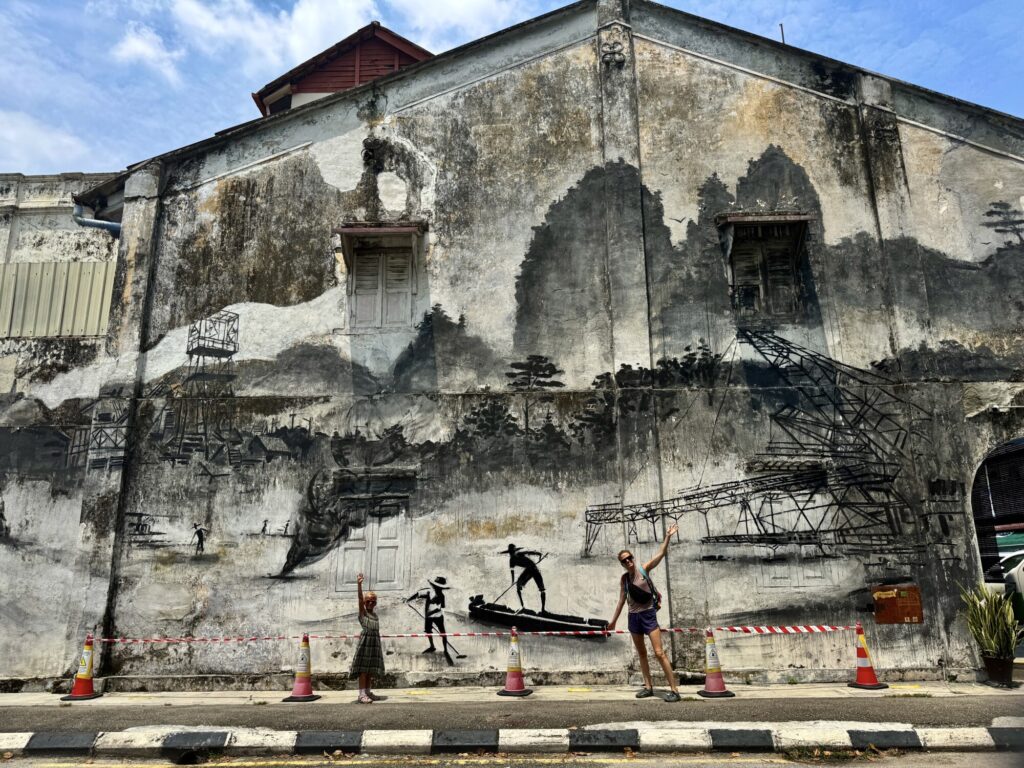
Mural Art, Cafés, and the Very Necessary Coffee Stops
We went into cafés when someone needed a break, when the sun got a little too strong, or when I just needed coffee to continue being a functional parent. These stops weren’t interruptions, they were part of the rhythm of the walk. [read about the cafes we took our kids to]
One of my favorite things about pairing street art with cafés was how naturally it broke up the day. Walk. Look. Pose. Sit. Reset. Repeat.
And because so many cafés are tucked just off the main lanes, it never felt like a detour. You step inside, cool down, regroup, and then head right back out where you left off.
If coffee is important to you (and let’s be honest, it probably is), Ipoh will not disappoint. Even without seeking out specific spots, we consistently found good coffee.
Street art gets all the attention, but honestly? The cafés are what made the experience sustainable.

Is Ipoh Street Art Worth It with Kids?
Yes. But not because it’s spectacular or famous or something you have to see.
Ipoh street art didn’t feel like an attraction we needed to conquer. It felt like a walk that turned into something meaningful because we let it. We followed the kids. We stopped when it felt right. We left when it felt done.
And that’s probably why it stuck with me.
After eleven months of traveling, Ipoh became a place where we could slow down without feeling like we were missing out. The streets were walkable. The people were kind. The pace was gentle. And the art gave us something to notice without demanding our full attention.
If you’re moving through Malaysia with kids and wondering whether Ipoh deserves a stop, I’d say this: if you’re craving a place where mornings feel easy and exploration doesn’t feel like work, then yes—it’s worth it.
You don’t need a plan.
You don’t need to see every mural.
You don’t need to make it a “thing.”
Grab a coffee.
Take a walk.
Let your kids point things out you would’ve missed.
Sometimes the best travel days aren’t the ones you planned for weeks, they’re the ones that quietly surprise you while you’re just walking around.
And Ipoh did exactly that for us.
More on the Blog:
Take your kids to the Lost World of Tambun theme park
How much did 5 weeks in Ipoh cost us