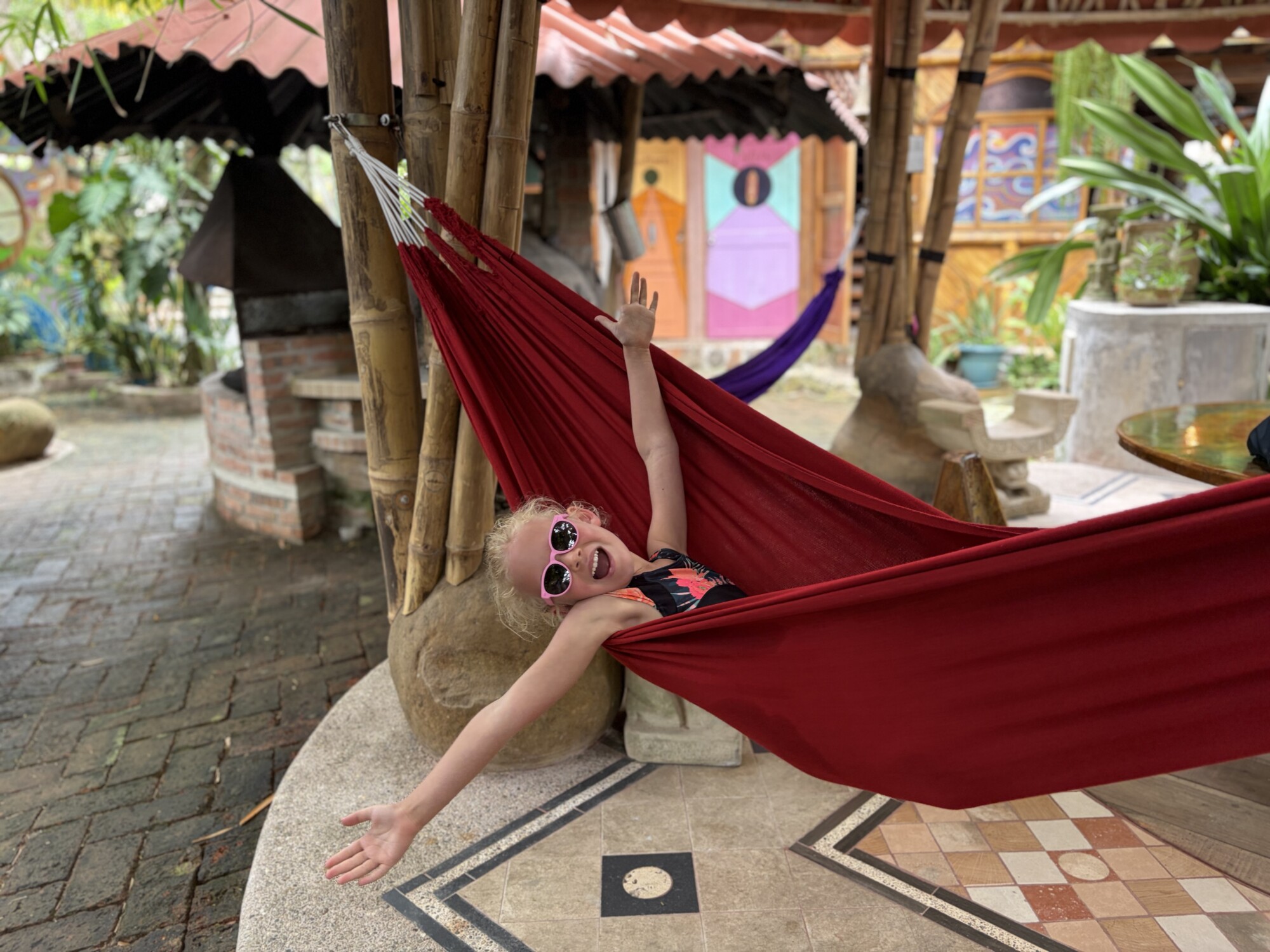
If Cotopaxi National Park has been on your list of places to take your kids, you’re in luck. We spent two nights there as a family of four, and we’re going to tell you everything we wish we knew before we went.
Because Cotopaxi is stunning. But it’s also the kind of place that can knock you flat if you show up unprepared.
This isn’t a “land in Ecuador and head straight to the volcano” kind of destination. Especially not with little kids.
At the base of the national park, you’re already at about 11,000 feet. That’s just the starting point. And you feel every bit of it.
So this post is for the parent who wants the real version. The logistics. The mistakes. The kid-friendly choices. The stuff that makes the difference between a magical day outside… and a day where everyone is toast by noon.
We’ll walk through how we got there (including what we did wrong), where we stayed, what we did inside the park, what felt safe (and what to watch out for), and the exact choices we made traveling with a three-year-old.
And yes, we did get lucky. Twice.
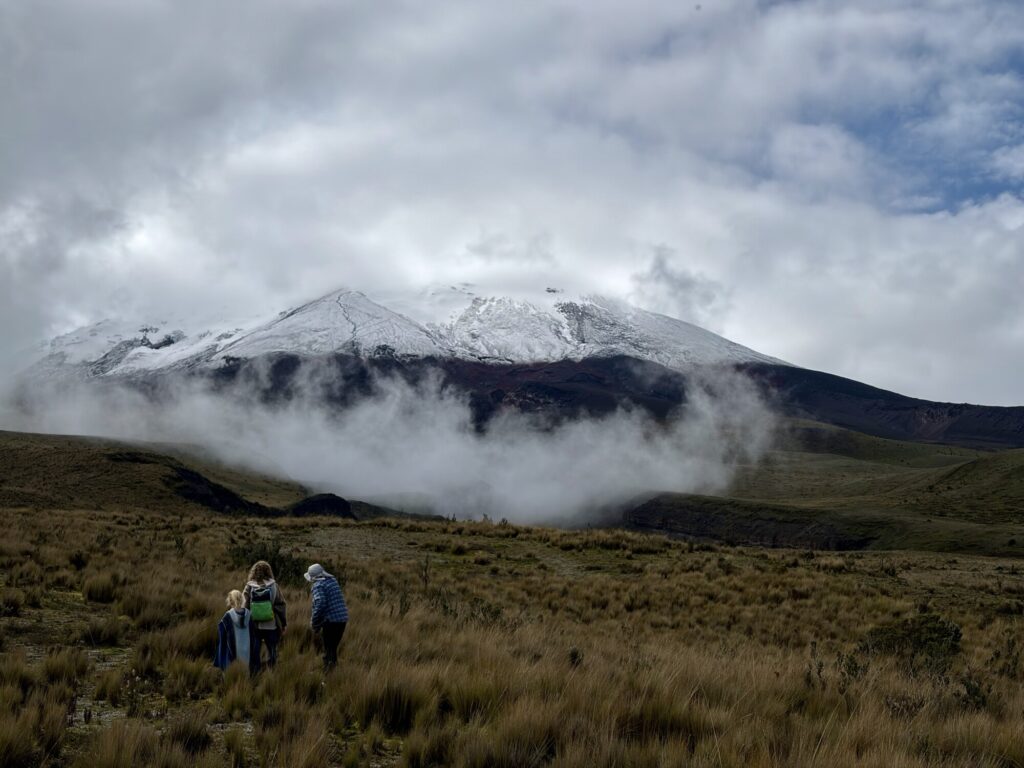
Cotopaxi actually showed itself through the clouds, and we even saw condors flying overhead. Our guide said both are rare. Which made the whole trip feel even more worth it.
If you’re planning Ecuador with young kids and wondering if Cotopaxi is realistic for your family, this will help you decide.
First Things First: The Altitude Is No Joke
Before we talk lodges and volcano views, we need to talk about the one thing that can make or break your Cotopaxi trip with kids: altitude.
Cotopaxi National Park starts at around 11,000 feet (3,350 meters), and that’s just arriving. If you hike higher toward base camp, you’re getting close to 15,000 feet. We flew into Quito first (already high altitude), and even there we noticed it: walking felt harder, we needed more water, and everyone tired faster. Heading up to Cotopaxi made that adjustment even more obvious.
With kids, altitude doesn’t always show up as “I feel sick.” Sometimes it looks like extra crankiness, unusual fatigue, or kids getting overwhelmed faster than normal. Even easy walks can feel like a workout at 11,000 feet, especially if you’re carrying a toddler.
Our biggest tip: don’t land in Ecuador and immediately head to Cotopaxi. Give yourselves a few days in Quito to acclimate, keep activity light, drink a ton of water, and watch how your kids are doing. And don’t underestimate the sun up here either—high elevation + equator means sunscreen and hats are non-negotiable, even if it’s cool or cloudy.
Cotopaxi is the kind of place where going slow is the secret. If you respect the altitude and plan for shorter walks and more rest, you’ll enjoy the experience instead of just trying to push through it.
Getting to Cotopaxi National Park (And What We’d Do Differently)
Let’s talk logistics, because getting to Cotopaxi sounds simple until you’re doing it with kids, bags, and real Ecuador roads.
Most families fly into Quito and then head south toward Machachi, the small gateway town before the park. From there, you continue on to your lodge. There are a few ways to do this, but if I could redo our trip, I’d change one thing.
You can take a bus from Quito to Machachi, which is budget-friendly and straightforward. Once you arrive, there are plenty of local drivers who regularly take families out to the lodges near Cotopaxi. It’s completely normal and easy to arrange.
Instead, we booked an Uber directly from Quito to our lodge because it looked simple on the app, about an hour and roughly $30 USD. What we didn’t realize is that once you pass Machachi, the road turns into long stretches of bumpy gravel. That “easy” ride quickly becomes rough and longer than expected, especially with tired kids in the backseat.
We ended up tipping our driver extra because he truly went above and beyond, but it wasn’t the smoothest plan.
If you want the simplest option, get yourself to Machachi first, by bus or Uber, and then hire a local driver for the final stretch. That portion is usually around $20–$25, and those drivers know exactly what they’re getting into.
One last tip: when you’re ready to leave, ask your lodge to arrange a driver back to Machachi. It’s much easier to schedule it ahead of time than to figure it out last minute with kids and luggage waiting outside.
Where to Stay Near Cotopaxi With Kids
Once you figure out how to get there, the next big decision is where to stay, and this really shapes your Cotopaxi experience with kids.
Most lodges are just outside Cotopaxi National Park rather than inside it, which actually works in your favor. You still get the scenery and that remote, peaceful feeling, but with more comfort and flexibility (which matters a lot at high altitude).
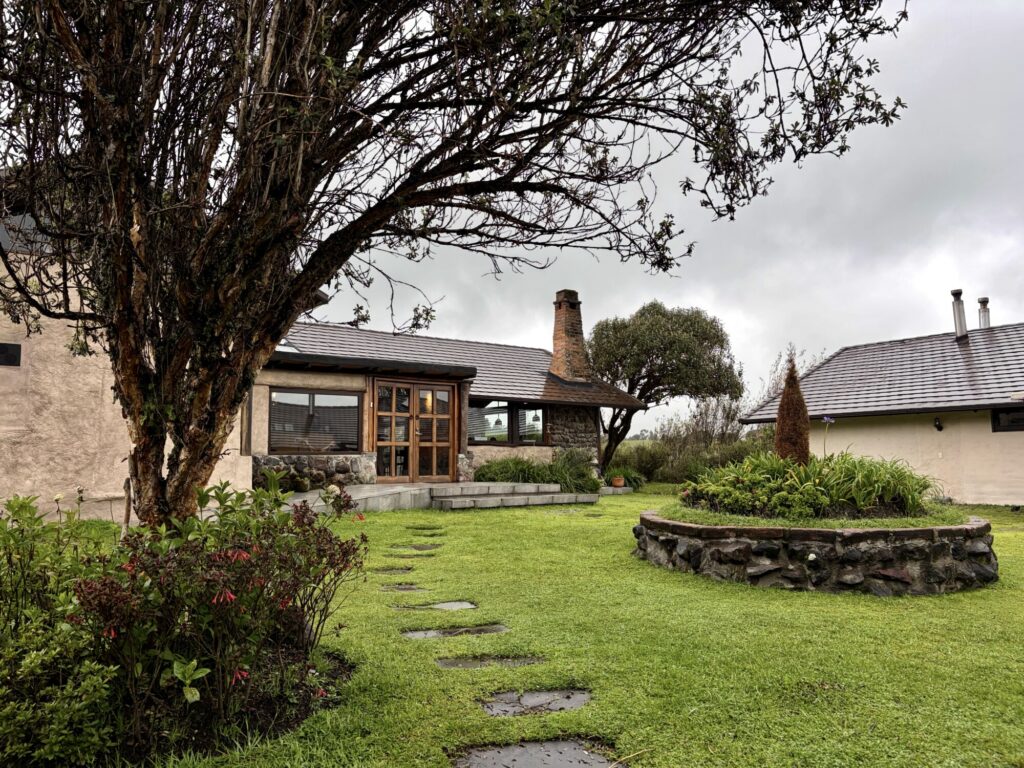
We stayed at Chilcabamba Lodge, and it was a great fit for our family. From the moment we arrived, it felt calm and welcoming. Staff greeted us at the car, helped with bags, and walked us through the main lodge before showing us to our room. It looks fancy in photos, but it didn’t feel precious or stressful with kids, it felt cozy.
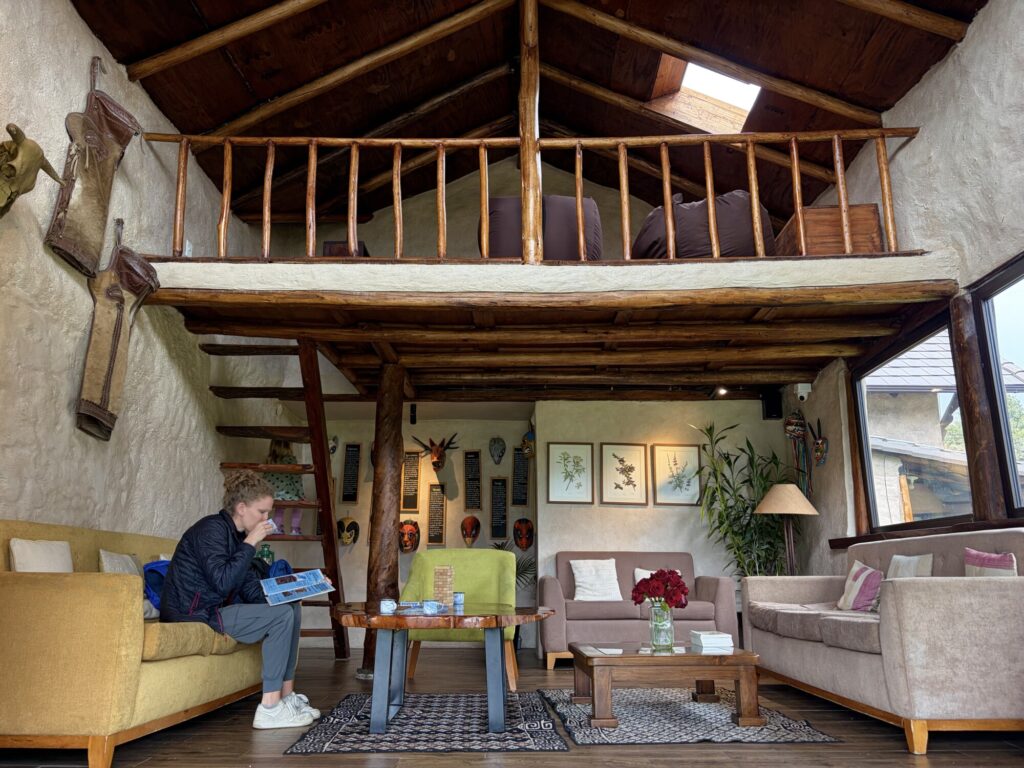
The main lodge has big windows facing the volcano (when it decides to show itself), plus games in the common area and a loft full of kids’ books. Our kids made themselves at home immediately, which is always the best sign.
We also had a two-bedroom setup, which was huge for us. Between working at night and having little kids, sharing one hotel room is just not our favorite. Having separate sleeping spaces plus a fireplace made it feel more like a warm mountain cabin than a typical lodge stay.
And the grounds were perfect for easy kid movement, grassy areas, little paths, swings facing the volcano, and even bunnies hopping around. No cars, no noise, just quiet. After Quito, the silence felt almost unreal.
There is a lodge inside the park if you want to stay within the boundaries, but for most families, staying just outside gives you the best balance: cozy lodging, kid-friendly space, and still the Cotopaxi magic you came for.
Exploring Cotopaxi National Park With Kids
This is why you came.
Once you’re settled and acclimated, it’s time to actually enter Cotopaxi National Park, and this is where expectations matter.
We booked a private full-day tour through our lodge, and for traveling with kids, I genuinely think this is the easiest route. It covered transportation, park entrance fees (which were around $10 per person), and gave us a guide who understood the terrain, the weather patterns, and how to pace the day.
Could you self-drive? Yes. But having someone else handle navigation at high altitude while you focus on your kids was worth it for us.
The Big Question: Do You Hike to Base Camp?
One of the most popular things to do in Cotopaxi is hike from the parking lot up toward the refuge, which puts you close to 15,000 feet.
We chose not to.
With a three-year-old and the wind conditions that day, it didn’t feel like the right call. Our guide was honest about it too, he said we could do it, but it would be cold, windy, and physically demanding at that elevation.
And here’s the thing: you don’t have to hike it to experience it.
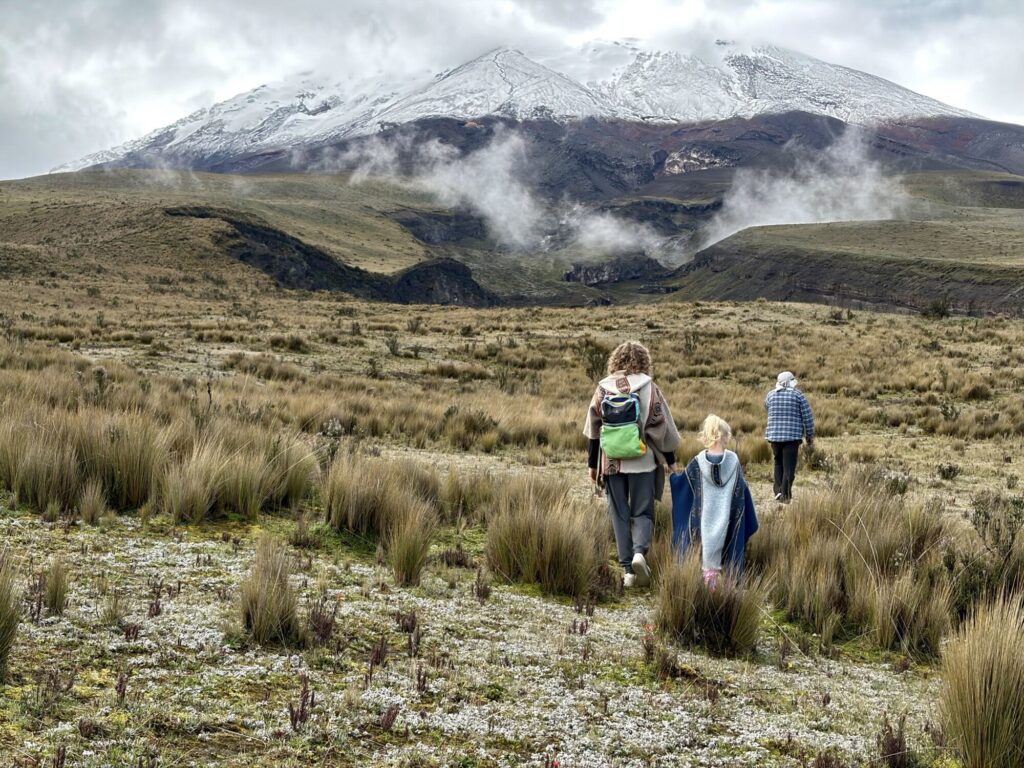
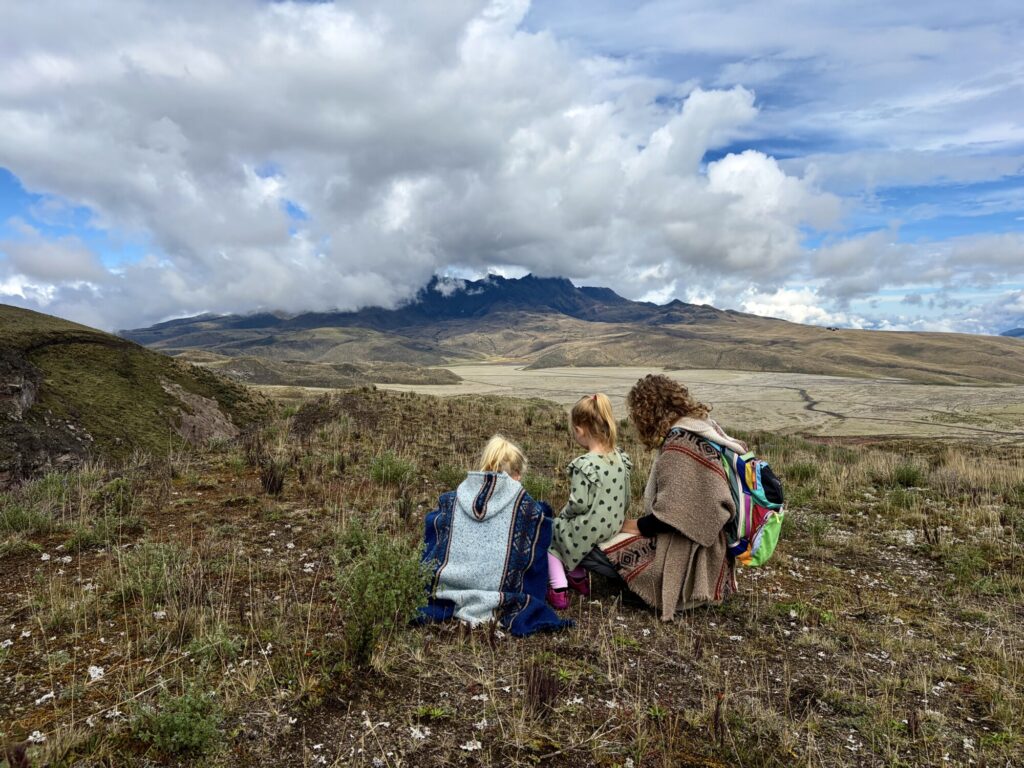
Instead, we drove to a lava crevasse viewpoint directly in front of the volcano. From there, we walked through open grasslands, looked for wild horses and llamas, and let the kids run freely while we took it all in.
It felt expansive. Peaceful. Not rushed.
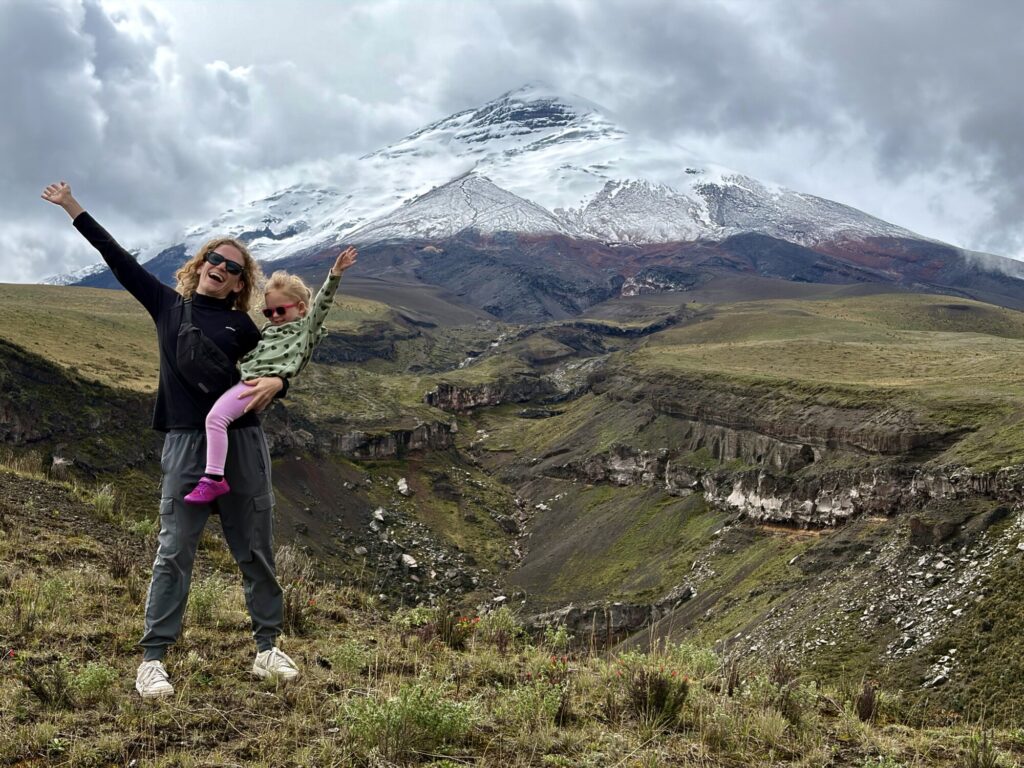
The Moment the Volcano Appeared
Cotopaxi is often hidden behind clouds. That’s normal. You can spend hours there and never see the full peak.
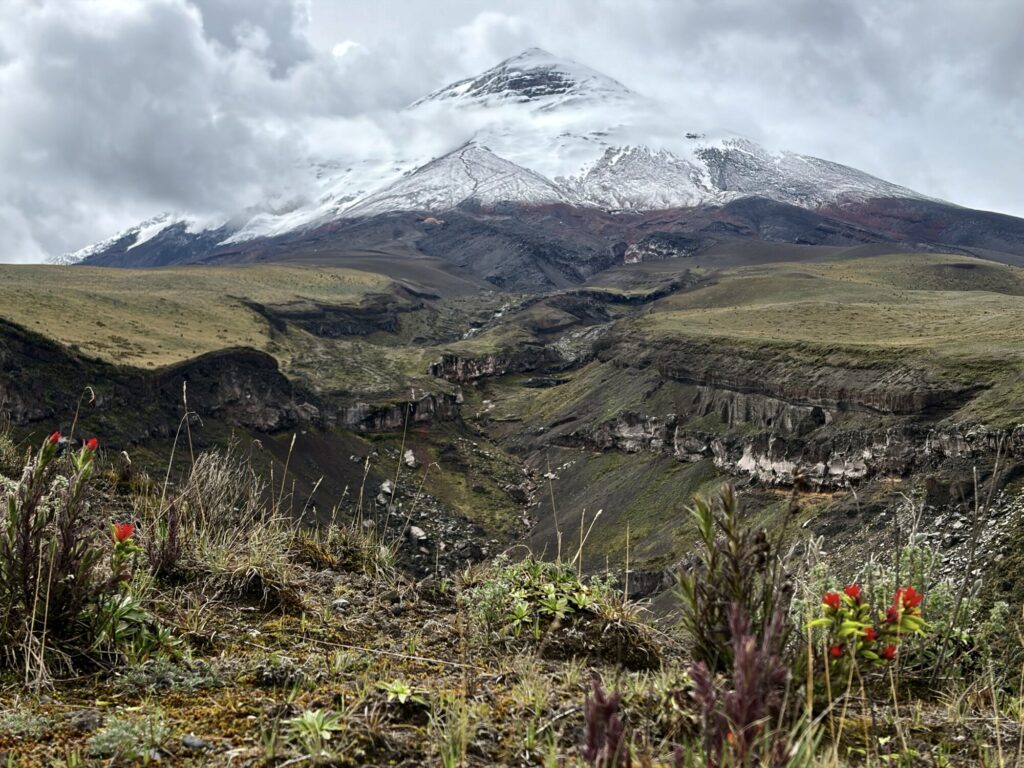
But twice during our visit, the clouds parted for just a few minutes, and the volcano revealed itself completely.
It lasted maybe three to five minutes each time.
Even our guide was pulling out his phone because he said it’s rare to see it that clearly. The kids were playing in the grass, we were standing there in silence, and suddenly this snow-capped giant was fully visible in front of us.
That was enough.
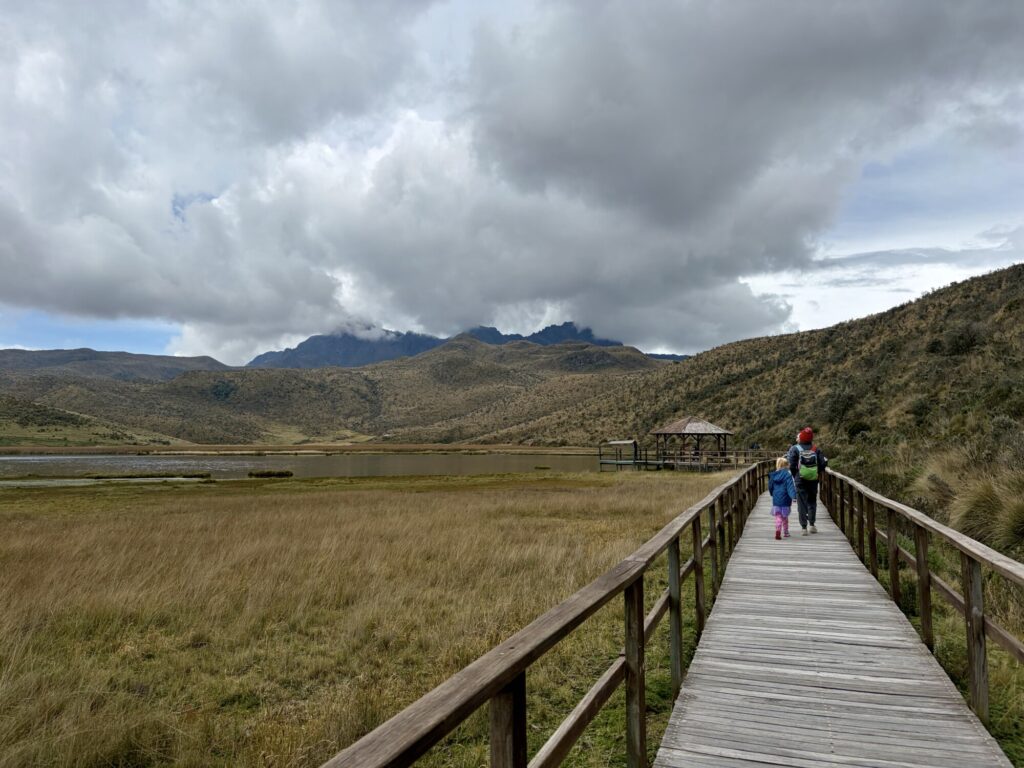
The Lagoon Loop (And Knowing When to Stop)
We also visited Limpiopungo Lagoon, which has a flat walking loop around it. It’s beautiful and manageable in terms of terrain, but it’s longer than it looks.
By the end, our kids were done. Hungry. Tired. We carried them part of the way back.
If you’re traveling with little ones, don’t feel pressure to complete the full loop. Do part of it. Turn around when energy dips. The views are still stunning without pushing everyone past their limit.
That was probably our biggest takeaway from exploring Cotopaxi with kids: pace matters more than distance.
The park is vast and dramatic, but it doesn’t require conquering. Sometimes standing still in front of it is more powerful than hiking higher into it.
Food, Costs & What We Actually Spent
Let’s talk numbers because I know when you’re planning a trip like this with kids, you want to know what it’s really going to cost.
One thing to understand about staying near Cotopaxi National Park is that you’re not popping out to a grocery store or walking into town for dinner. Once you’re at your lodge, you’re there. So meals are typically handled on-site.
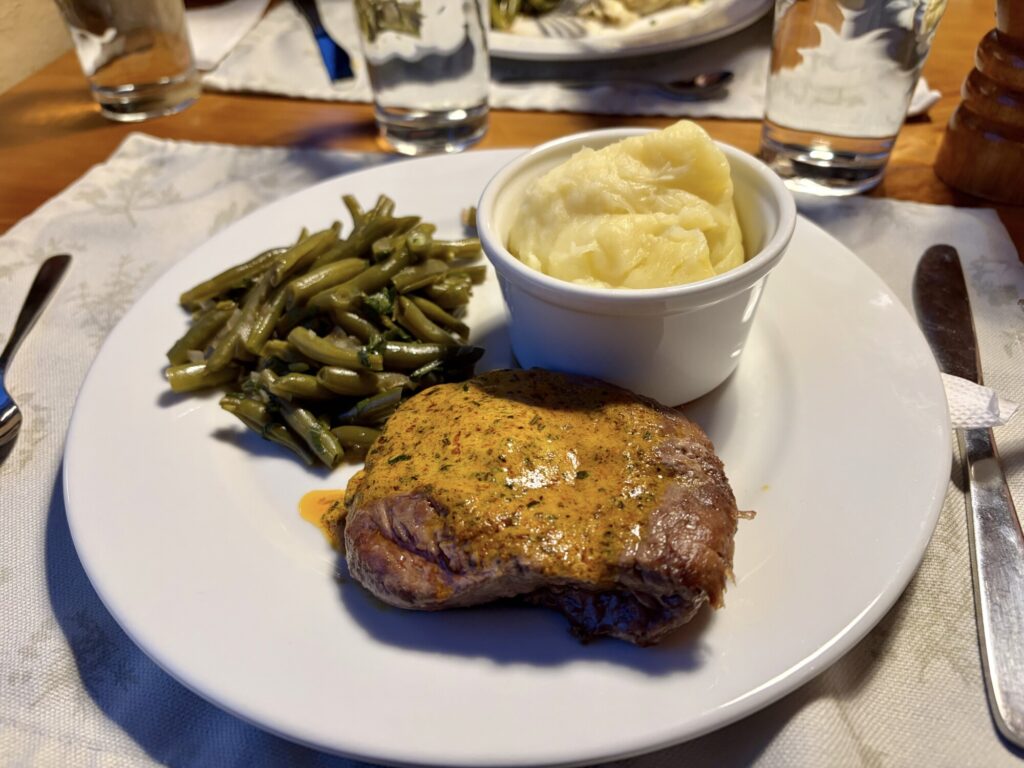
At Chilcabamba Lodge, breakfast, lunch, and dinner were all available, and honestly, the food surprised us in the best way. Breakfast was scheduled the night before — they asked what time we wanted it ready, and it was waiting when we arrived. No stress. No rushing kids.
Lunch had a smaller menu with lighter options, and dinner was either à la carte or a set menu depending on how full the lodge was. One night, there was a fixed menu for all guests. The second night, it was just us and one other room, so we ordered individually.
One of the dinners was a four-course meal for $23 per adult, and it was genuinely good. Not “good for being remote.” Just good. Our kids ate it too, which always feels like a victory.
Here’s what we spent for two nights as a family of four:
- Lodge (2 nights, including taxes): $342
- Meals (2 breakfasts, 2 dinners, 1 lunch for 4 people): $126
- Private full-day tour (with entrance fees + taxes): $190
- Lunch inside the park one day: $24
So all in, we were just under $700 for two nights, including accommodation, meals, and a private guided tour.
For a private volcano experience at 11,000+ feet, in total quiet, with wildlife and wide-open space? We felt it was worth it.
A few practical money tips before you go:
Private transfers are cash only, so bring small bills and exact change if possible. Ecuador uses U.S. dollars, but getting change back can be surprisingly difficult. Lodges typically accept credit cards, but drivers usually do not.
When you’re budgeting, remember that Cotopaxi isn’t a place where you’re spending on attractions every hour. It’s more about paying for access, comfort, and the experience itself.
And sometimes, that kind of simplicity is exactly what makes it feel special.
Is Cotopaxi Safe With Kids?
Anytime you’re heading somewhere remote and high altitude with little ones, safety naturally becomes part of the conversation.
In terms of personal safety, we felt completely comfortable the entire time near Cotopaxi National Park. The area is quiet, the lodges are spaced out, and the only people you’re really interacting with are staff, guides, or other travelers. There were no moments where we felt uneasy.
The real safety considerations here aren’t about people, they’re environmental.
Altitude is the first factor, but the second big one is sun exposure. You’re at high elevation and close to the equator, which means the sun feels intense even on cool days. Sunscreen, hats, sunglasses, and constant water breaks are essential, especially for kids.
Wind can also pick up quickly if you’re higher in the park, so layers matter. What feels mild at your lodge can feel much colder near the refuge.
As for wildlife, you may see wild horses, llamas, or condors overhead. They tend to keep their distance, and we didn’t experience anything that felt unsafe.
The biggest practical thing to remember is that once you’re out there, you’re somewhat committed. There aren’t stores or quick stops nearby, so bring what your kids might need snacks, medications, extra layers, and plan ahead.
Overall, Cotopaxi felt calm and manageable with kids. With a little preparation and respect for the environment, it’s absolutely a safe and peaceful place for families.
Final Thoughts: Is Cotopaxi Worth It With Kids?
So the real question is, should you take your kids to Cotopaxi National Park?
If you’re expecting theme-park energy, constant activities, or a packed sightseeing schedule, this probably isn’t your stop.
But if you’re craving wide-open space, fresh air, quiet mornings, and the kind of landscape that makes your kids stop mid-sentence and just stare… then yes. It’s absolutely worth it.
Cotopaxi isn’t about checking off a list of attractions. It’s about slowing down enough to feel small in the best way. It’s about watching your kids run through high-altitude grass while a volcano hides and reappears behind the clouds. It’s about cozy evenings by a fireplace after a day spent mostly outdoors.
And honestly? It’s about adjusting your expectations.
You may not hike to 15,000 feet with a toddler. You may not see the volcano perfectly clear all day long. Your kids may get tired faster than usual. But none of that takes away from the experience, it just shapes it into something that fits your season of life.
For us, Cotopaxi wasn’t about conquering a mountain. It was about standing in front of one.
It was quiet. It was simple. It was different from anywhere else we’ve taken our kids.
And when the clouds parted for those few minutes and the snow-covered peak showed itself fully, we weren’t thinking about the cost, the drive, or the altitude.
We were just there.
And sometimes, that’s the whole point.